

Why Ignoring Financial Reports Could Be Killing Growth (And What to Look at Instead)
Most business owners don’t ignore their financial reports because they don’t care. They ignore them because the reports don’t feel useful in the moment.
You open a report, see a wall of numbers, and quickly realize it’s not obvious what to do with any of it. So you close it, tell yourself you’ll come back when you have more time, and move on to something more urgent.
That usually becomes the pattern.
In the meantime, decisions are still being made on pricing services, hiring help, and taking on expenses without clear numbers guiding those choices. Nothing breaks immediately, but things start to drift. Margins tighten, cash gets less predictable, and growth slows down without a clear reason why.
What These Reports Are Really Telling You
This is more common than you think.
Most small business owners aren’t avoiding financial reports because they’re careless, they’re avoiding them because the reports don’t feel clear or immediately helpful.
And when something feels unclear, it’s easy to keep pushing it off.
The issue is that financial reports aren’t just there for tax filings or compliance. They’re one of the only places where you can see what’s actually happening inside your business, beyond what your bank balance or sales numbers suggest.
You don’t need to understand every detail to benefit from them. What matters is knowing what to look for, what signals something important, and how to recognize when a number needs attention.
That’s what we’ll walk through next.
Why Most Business Owners Avoid Financial Reports
This usually isn’t a discipline problem. It’s a clarity problem.
Most business owners fully intend to stay on top of their numbers, but when reports don’t clearly show what matters or what to do next, they quickly become something that gets pushed aside. Over time, that avoidance starts to feel normal, even if it wasn’t intentional.

They’re hard to interpret
Financial reports are often presented in a way that assumes you already know what you’re looking at. Terms like “net income,” “operating expenses,” or “accrual adjustments” show up without much context, which makes it difficult to connect those numbers to real business decisions. Even when the information is accurate, it doesn’t feel usable, so it’s easier to move on to something more familiar.
They don’t seem immediately relevant
If a report doesn’t clearly answer a question you’re already asking, it’s easy to assume it’s not that important. Most business owners are focused on getting clients, delivering work, or managing day-to-day operations, so anything that doesn’t feel directly connected to those priorities tends to get delayed. The issue is that financial reports often answer questions you haven’t thought to ask yet, which is why they get overlooked.
There’s a concern about what you might find
Sometimes the hesitation isn’t about understanding the report, it’s about what it might reveal. If things haven’t been closely tracked for a while, there’s often a quiet concern that something is off. That uncertainty can make it easier to avoid looking altogether, especially when everything seems to be running well enough on the surface.
There’s never a clear moment to review them
Financial reports don’t usually come with a built-in routine unless you create one. Without a set time to review them, they fall behind more urgent tasks, and once a few weeks or months pass, catching up starts to feel like a bigger effort than it actually is.
This is also where a lot of time gets lost. When financial tasks don’t have a clear system, they tend to take longer than expected and get pushed between other priorities. If that sounds familiar, here’s a closer look at why business owners end up spending more time on finances than they need to.
When you put all of this together, it becomes clear why financial reports get ignored. It’s not a lack of responsibility; it’s that the reports haven’t been made clear, relevant, or easy to act on.
What Financial Reports Actually Do
Most people assume financial reports are detailed, technical documents meant for accountants or tax filing.
In reality, they’re much simpler than that.
At a basic level, financial reports answer a few key questions about your business. You don’t need to understand every line you just need to know what they’re pointing to.

They show where your money is actually going
It’s easy to assume you know your expenses based on memory or your bank account. But when everything is laid out clearly, patterns start to show.
Financial reports help you see:
Which expenses are consistent every month
Where costs are slowly increasing
What you’re spending more on than expected
This is usually where people notice things they hadn’t been paying attention to.
They show if your business is truly profitable
Revenue on its own doesn’t tell you much. You can be bringing in more money than ever and still feel like nothing is improving.
Financial reports help clarify:
How much are you actually keeping after expenses?
Whether your margins are improving or shrinking
If your current pricing supports your costs
This is often where the gap between “busy” and “profitable” becomes clear.
They show what might become a problem soon
One of the most useful parts of financial reports is that they don’t just reflect the past; they help you spot issues early.
They can highlight:
Expenses are increasing faster than revenue
Cash levels are getting tighter over time
Irregular patterns that don’t match your normal operations
These are the kinds of signals that are easy to miss when you’re only looking at your bank balance.
They give you a clearer way to make decisions
Without clear numbers, most decisions rely on instinct or urgency. That works in the short term, but it becomes harder to scale.
With basic financial visibility, you can:
Make hiring decisions based on actual capacity
Adjust pricing with a clearer understanding of margins
Plan ahead instead of reacting to problems
You don’t need perfect analysis to benefit from this. You just need enough clarity to make more informed choices.
At the end of the day, financial reports aren’t about complexity. They’re about visibility.
Once you can see what’s actually happening in your business, the next steps tend to become much easier to recognize.
What Happens When You Ignore Financial Reports
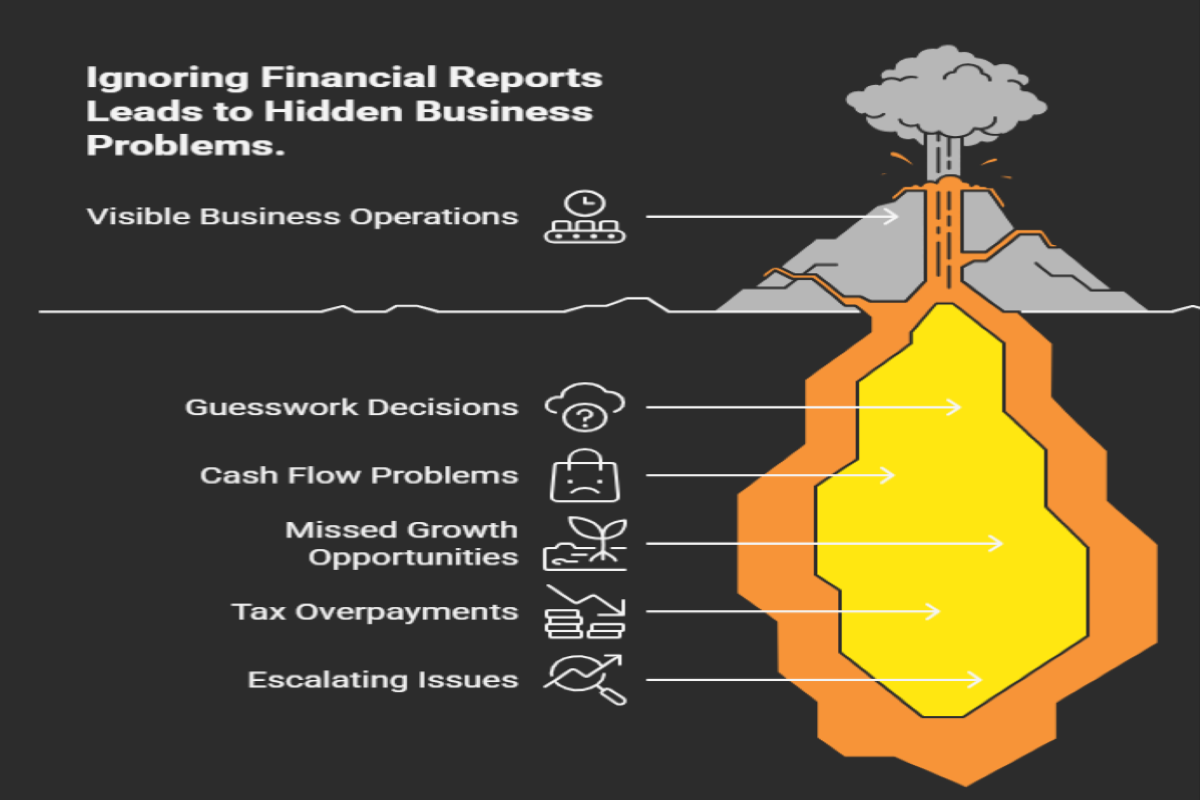
Nothing usually goes wrong all at once.
This is usually where hidden issues begin to build. Small gaps in visibility often go unnoticed at first, but over time, they start affecting decisions, cash flow, and growth. This is often described as a “blind spot” in the business, something that isn’t obvious until it becomes a problem. This breakdown of how business blind spots can impact growth explains that pattern in more detail.
That’s part of what makes this easy to overlook. The business keeps running, revenue is still coming in, and things feel manageable on the surface...
Here’s what that typically looks like.
1. You start making decisions based on guesswork
When financial reports aren’t part of your routine, most decisions end up being based on what feels right in the moment.
That might include:
Hiring because things feel busy
Spending on tools or services without knowing the real impact
Setting prices based on competitors instead of your actual costs
Sometimes those decisions work out, but over time, the lack of clear numbers makes it harder to know what’s actually driving results and what isn’t.
2. Cash flow problems catch you off guard
Revenue and cash aren’t the same thing, and this is where many businesses get caught off guard.
Without regularly reviewing financial reports, it becomes harder to see:
When cash is tightening over time
Whether incoming revenue is covering outgoing expenses
How much buffer do you actually have
This is often why businesses feel fine one month and suddenly stretched the next, even if sales haven’t changed much.
3. You miss opportunities to grow
When you’re not reviewing your numbers, it’s difficult to see what’s working well.
You might not notice:
Which services or products are the most profitable
Where you could safely invest more
When the business is actually ready to grow
Growth decisions become reactive instead of intentional, which can slow things down even when opportunities are there.
4. You end up paying more in taxes than necessary
When financial records aren’t clear or consistently reviewed, it becomes easier to miss deductions, overlook patterns, or wait until the last minute to organize everything.
That often leads to:
Missed opportunities to reduce tax liability
Rushed decisions during tax season
Less visibility into what could have been planned earlier
This usually isn’t about making mistakes; it’s about not having the right information at the right time.
5. Small issues turn into expensive problems
Minor inconsistencies in your numbers don’t always feel urgent, so they tend to get pushed aside.
But over time, those small issues can turn into:
Larger bookkeeping errors
Compliance risks
More complicated (and costly) corrections later
What could have been a quick adjustment early on often becomes a bigger fix simply because it wasn’t visible.
When you look at these together, the pattern becomes clear.
Ignoring financial reports doesn’t create immediate problems; it creates delayed ones. And by the time they’re visible, they’re usually harder, more stressful, and more expensive to deal with.
The Only Financial Reports You Actually Need to Pay Attention To
One of the biggest misconceptions about financial reports is that you need to review everything.
You don’t.
Most business owners don’t need dozens of reports or deep analysis. In most cases, just a few core reports are enough to understand what’s happening and make better decisions. Once those are clear, everything else becomes easier to interpret.
The goal isn’t to track everything; it’s to focus on what actually gives you visibility.

Profit and Loss Statement (P&L)
The profit and loss statement shows how much money your business is bringing in and how much it’s spending over a specific period of time. This is usually the first place to look because it gives you a direct view of performance.
When reviewing it, the main thing to pay attention to is whether your income is consistently covering your expenses and leaving room for profit. If revenue is increasing but profit isn’t, that usually signals that costs are growing just as quickly, which is something worth looking into.
You don’t need to analyze every category in detail. What matters most is understanding whether the business is actually becoming more profitable over time or just getting busier without stronger results.
Cash Flow Statement
The cash flow statement shows what’s actually moving in and out of your business. This is different from profit, and it’s often the reason businesses feel tight on cash even when they appear to be doing well.
This report helps you understand whether money is coming in fast enough to cover what’s going out. It also gives you a clearer picture of how stable your cash position is from one period to the next.
If there’s one report that prevents surprises, it’s usually this one. It helps you see changes early, before they turn into situations where you’re scrambling to cover expenses.
Balance Sheet
The balance sheet gives you a snapshot of what your business owns and what it owes at a specific point in time. It’s not something most business owners need to review in depth every week, but it becomes useful when you want a clearer picture of your overall financial position.
It can help you understand how much of your business is supported by debt versus what you actually own, and whether that balance is shifting over time. It also provides context for the other reports, especially when something doesn’t seem to add up.
Most businesses already have access to these reports, even if they’re not reviewing them regularly.
Once you know which ones matter, the process becomes much more manageable. Instead of feeling like you need to understand everything, you can focus on a small set of numbers that actually reflect how your business is performing.
What to Look for in Your Financial Reports (Without Overthinking It)
Once you know which reports to focus on, the next question is usually what to actually look for.
This is where many people get stuck. It feels like you need to analyze everything in detail, but in reality, you’re just looking for a few clear signals. You’re not trying to interpret every number; you’re trying to understand whether things are moving in the right direction.
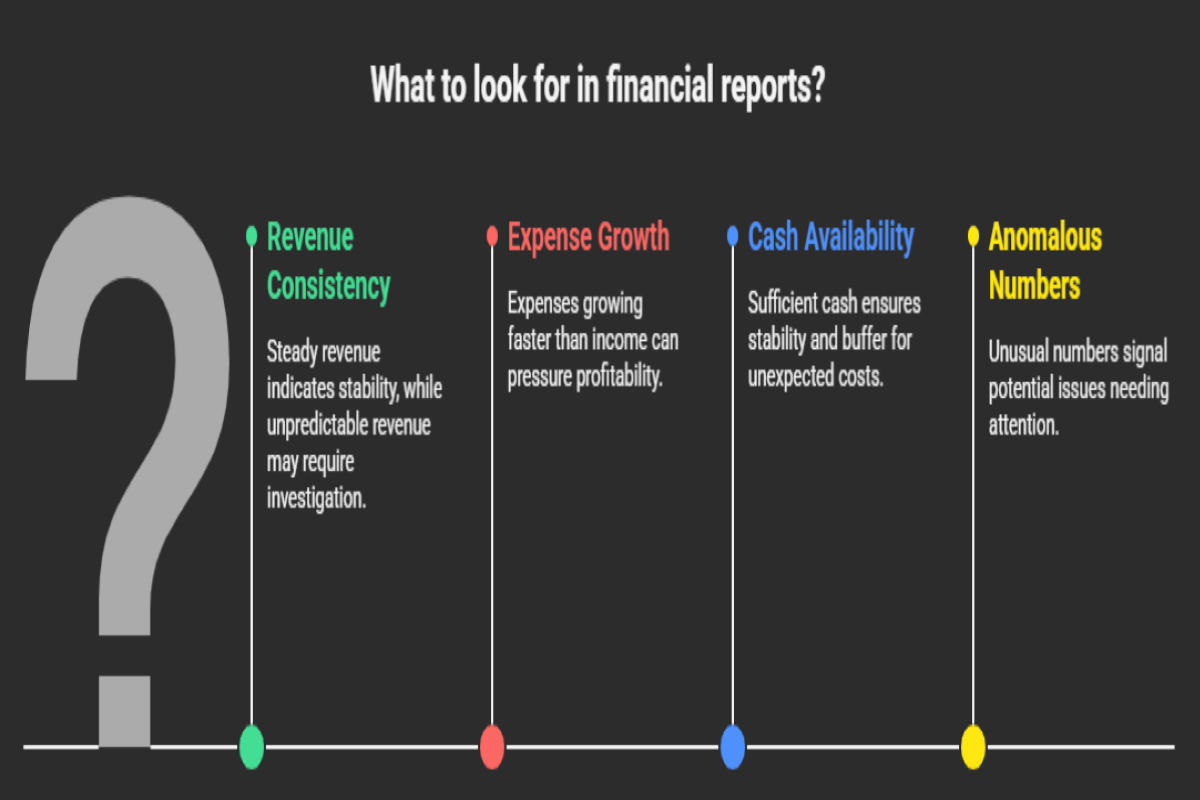
Here’s a simple way to approach it.
1. Is your revenue consistent or unpredictable?
Start by looking at whether your income is steady or changing from month to month. Some variation is normal, but large swings can make planning more difficult and often point to gaps in sales, pricing, or client retention.
If revenue feels unpredictable, it’s usually worth understanding why before making bigger decisions.
2. Are your expenses growing faster than your income?
It’s easy for costs to increase gradually without being obvious at first. Subscriptions, tools, payroll, and operational expenses can add up over time.
When expenses start rising at the same pace or faster than revenue, it puts pressure on profitability, even if the business appears to be growing.
3. Do you have enough cash to cover the next few months?
This doesn’t require a detailed forecast. A simple check is often enough.
Look at how much cash is available and compare it to your typical monthly expenses. This gives you a general sense of how stable your position is and whether there’s enough buffer to handle slower periods or unexpected costs.
4. Are there numbers that don’t make sense?
Sometimes the most useful signal is simply noticing when something feels off.
That could be:
An expense that seems unusually high
A drop in profit that doesn’t match your workload
A number that doesn’t align with what you expected
You don’t need to immediately fix it. The important step is recognizing it and taking a closer look.
When you approach financial reports this way, they become much more practical.
You’re not trying to decode everything; you’re just scanning for patterns, changes, and anything that needs attention. That alone is often enough to make better decisions and avoid bigger issues later.
How Often Should You Review Financial Reports?
This is where many business owners either overcomplicate things or avoid them entirely.
You don’t need to review your financial reports every day, and you don’t need to spend hours going through them. What matters more is having a simple, consistent rhythm that keeps you aware of what’s going on.
For most businesses, this is enough:
Monthly (your baseline)
This is the most important checkpoint.
A monthly review gives you a clear picture of how the business is performing without getting lost in daily fluctuations. It’s frequent enough to catch issues early, but not so frequent that it becomes overwhelming.
At this level, you’re mainly looking to:
Understand overall performance for the month
Spot any unusual changes in revenue or expenses
Check if profit and cash flow are where you expected
Weekly (if things are tighter or changing quickly)
You don’t always need a weekly review, but it becomes helpful in certain situations.
This usually applies if:
Cash flow feels tight
The business is growing quickly
You’re managing a lot of incoming and outgoing payments
A quick weekly check helps you stay ahead of short-term changes so nothing catches you off guard.
Quarterly (for bigger decisions)
Quarterly reviews are less about tracking and more about stepping back.
This is a good time to:
Look at trends over a longer period
Evaluate whether the business is becoming more profitable
Make larger decisions around hiring, pricing, or investments
It gives you a chance to connect the numbers to your overall direction.
For most business owners, starting with a simple monthly review is enough.
Once that becomes part of your routine, it’s easier to add more frequent or deeper reviews if needed. The goal isn’t to create more work; it’s to stay aware of what’s changing so you can respond early instead of reacting late.
A Simple Way to Start Reviewing Your Numbers (Even If You’ve Been Avoiding It)
If you haven’t been looking at your financial reports consistently, the hardest part is usually getting started.
It can feel like you need to catch up on everything at once, which is what causes most people to keep putting it off. The better approach is to keep it simple and build from there.
Here’s a practical way to start without overcomplicating it.
1. Start with just one report
You don’t need to review everything right away. Starting with your profit and loss statement is usually enough to get a basic understanding of how your business is performing.
This keeps the process manageable and removes the pressure of trying to figure out multiple reports at once.
2. Focus on one question at a time
Instead of trying to analyze every number, go in with a simple question.
For example:
“Am I actually profitable this month?”
“Are my expenses higher than I expected?”
Focusing on one question makes the report easier to interpret and gives you a clear reason for reviewing it.
3. Don’t try to fix everything at once
It’s common to notice a few things that need attention, especially if you haven’t reviewed your numbers in a while.
You don’t need to solve everything immediately. The goal is to become aware of what’s happening, not to correct every issue in one sitting. Small adjustments over time are usually more effective than trying to overhaul everything at once.
4. Get a second set of eyes if something feels off
If a number doesn’t make sense or something seems inconsistent, it’s worth having someone take a look.
You don’t need to have all the answers yourself. Sometimes, a quick review from someone familiar with financial reports can clarify what’s happening and whether anything needs to be addressed.
Starting this process doesn’t require a major time investment or a deep understanding of accounting.
It’s simply about creating a small habit of checking your numbers and building familiarity over time. Once that becomes consistent, the reports start to feel less like something to avoid and more like a useful part of running the business.
Common Mistakes Business Owners Make with Financial Reports
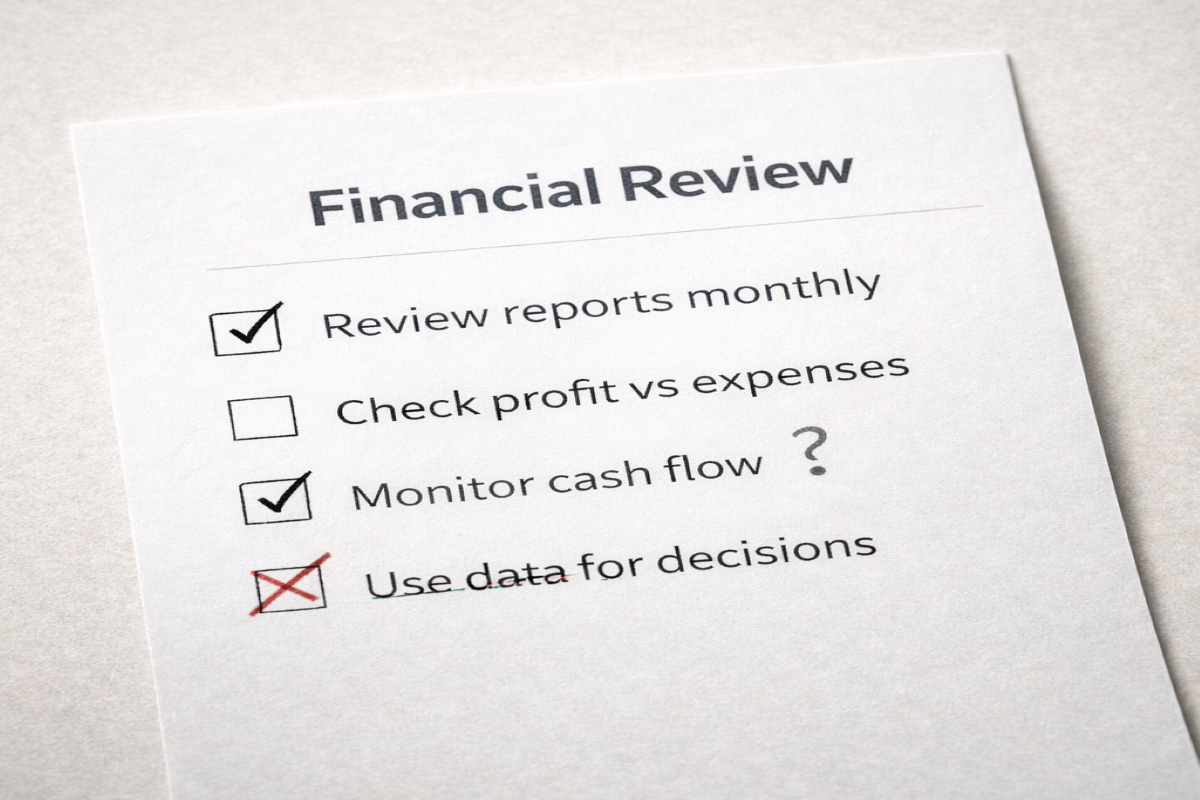
Most business owners don’t ignore financial reports completely; they just use them in ways that don’t actually help.
These patterns are common, especially when reports feel unclear or disconnected from daily decisions. Once you recognize them, they’re usually easy to correct.
Only looking at numbers during tax season
For many businesses, financial reports only come up when it’s time to file taxes. By that point, the numbers are being reviewed after the fact, which limits what you can do with them.
Decisions have already been made
Opportunities to adjust earlier are gone
Everything becomes reactive instead of planned
Focusing on revenue instead of profit
Revenue is the easiest number to track, so it often becomes the main focus. The problem is that revenue alone doesn’t show whether the business is actually improving.
Higher revenue can still mean lower profit
Costs can increase without being obvious
Growth can feel good, but not translate into better results
Ignoring cash flow until it becomes urgent
Cash flow tends to get attention only when something feels tight. By then, the issue has usually been building for a while.
Payments are going out faster than money is coming in
Not enough buffer for slower periods
Short-term decisions made under pressure
Trying to figure everything out alone
Many business owners feel like they should be able to understand their financial reports on their own. When that doesn’t happen easily, they either avoid them or spend too much time trying to interpret everything.
Time gets pulled away from running the business
Important details still get missed
Frustration builds without clear answers
Reviewing reports without connecting them to decisions
Even when reports are reviewed regularly, they don’t always lead to action.
Numbers are checked but not used
Patterns are noticed but not followed up on
Decisions are still made separately from the data
Most of these mistakes don’t come from neglect; they come from not having a clear way to use the information.
In many cases, these issues start earlier in the process, especially when the books themselves aren’t being handled consistently. You can see how that plays out in these common bookkeeping mistakes.
Once financial reports are tied to simple questions and decisions, they become much more practical and much easier to stay consistent with.
The Difference Between Having Reports and Actually Using Them
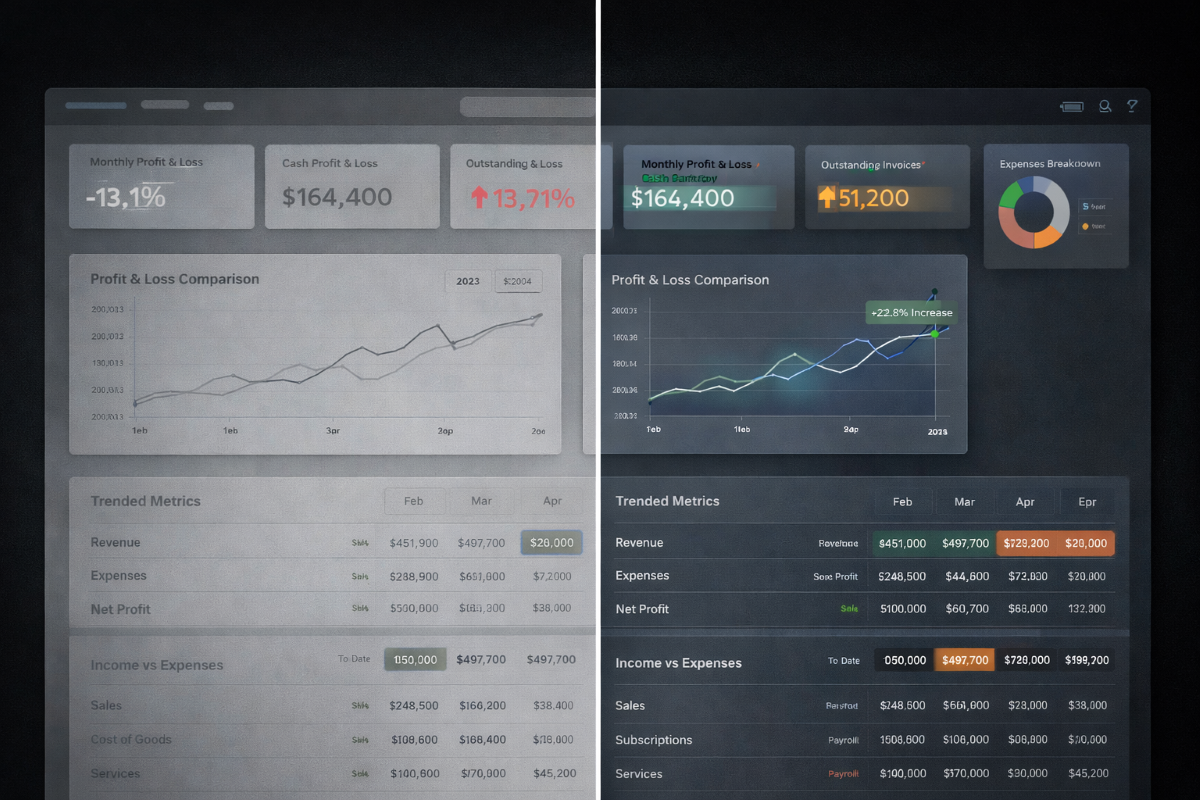
Most businesses already have financial reports.
They’re generated automatically through accounting software, sent monthly by a bookkeeper, or available anytime with a few clicks. The issue usually isn’t access—it’s how those reports are being used.
There’s a difference between having numbers and using them to guide decisions.
When reports aren’t used, they tend to become something you review occasionally without much impact. You might glance at revenue, skim a few numbers, and move on without anything changing in how the business is run.
Using reports looks different.
It means treating them as a reference point when making decisions. Before adjusting pricing, hiring, or taking on new expenses, you have a clearer sense of what the business can actually support. Instead of relying on assumptions, you’re working with something concrete.
This doesn’t require deep analysis or complicated systems. In most cases, it’s just a small shift, looking at the numbers with a specific question in mind and using the answer to guide your next step.
Over time, that shift adds up.
Decisions become more consistent. Problems are caught earlier. Growth becomes easier to manage because it’s based on what the business can sustain, not just what feels possible.
This Isn’t About Being “Good with Numbers”
A lot of business owners assume that if financial reports feel confusing, it means they’re not good with numbers.
That’s usually not the case.
Most of the time, the issue is that the reports haven’t been presented in a way that clearly shows what matters. When that clarity is missing, it’s natural to avoid something that feels technical or uncertain.
The reality is, you don’t need to understand everything inside your reports to benefit from them. You just need enough visibility to recognize patterns, ask the right questions, and notice when something needs attention.
This is something most business owners figure out over time.
Once the reports become clearer and more connected to real decisions, they stop feeling like a task and start becoming a tool. And when that happens, it’s much easier to stay consistent without forcing it.
If You’re Not Sure What You’re Looking At, That’s Normal

If your reports haven’t felt useful so far, that doesn’t mean anything is wrong on your end.
In most cases, it just means no one has walked you through what actually matters and how to use it. That’s a common gap, especially for business owners who are focused on running and growing their operations.
If something in your numbers doesn’t make sense or feels off, it’s worth taking a closer look. Even a quick review can bring clarity to things that have been sitting in the background for a while.
And if you want a second set of eyes, that’s always an option.
Sometimes it just helps to have someone walk through it with you and point out what’s relevant, what’s not, and what to do next.
Want a Clearer View of Your Numbers?
If you’d like, we can take a look at your reports together and walk through what’s actually worth paying attention to.
No pressure just a chance to get clarity on what’s working, what might need attention, and what your next steps could look like.
👉 Schedule a time to review your financial reports