
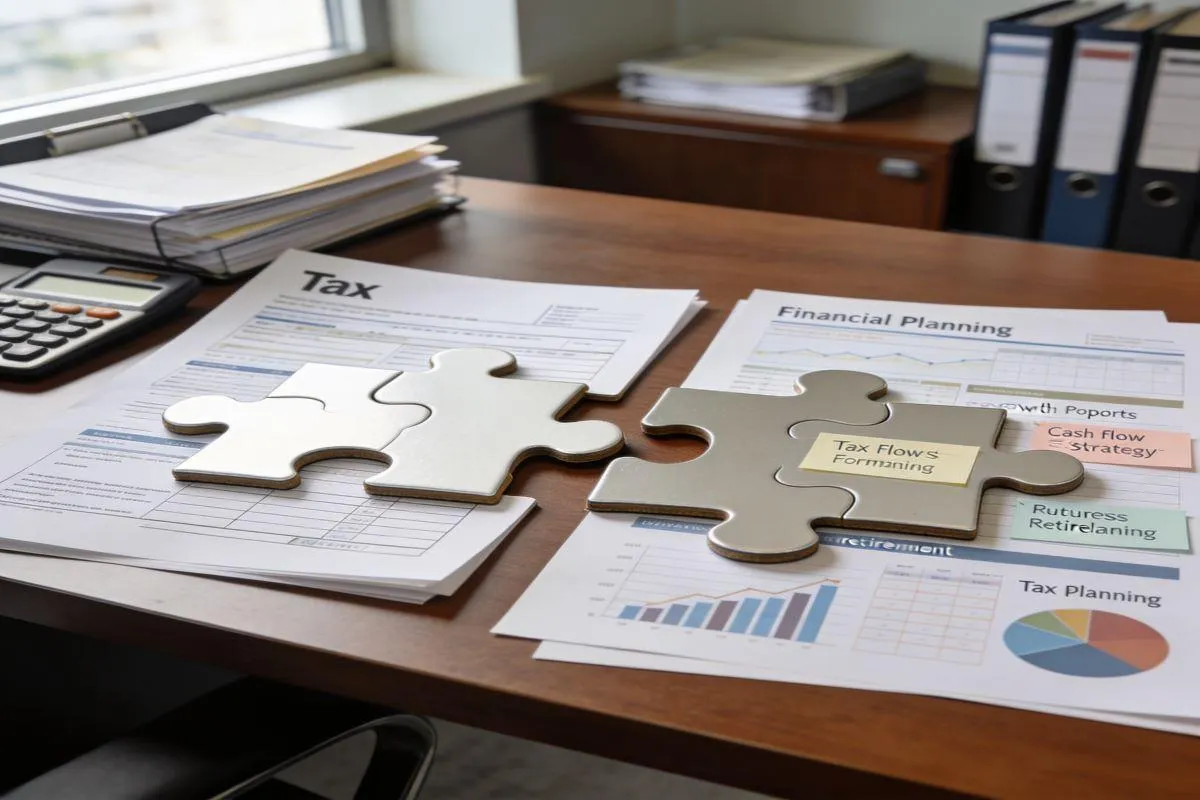
Why Tax Filing Without Tax Planning Can Cost You Money
Most people think tax filing and tax planning are the same thing.
They’re not.
Tax filing is reporting what has already happened. Tax planning is making decisions before the year ends so you can legally reduce what you owe later.
That difference matters more than most people realize.
Every year, people file their taxes correctly and still overpay. Not because they made a mistake on the return, but because the opportunities to lower their tax bill were missed months earlier.
This is especially common for:
Small business owners
Freelancers and self-employed professionals
People with multiple income sources
Anyone whose finances changed during the year
Nothing about that is unusual. Most taxpayers were never taught the difference between preparing taxes and planning for them.
The problem is timing.
By the time tax season arrives, many financial decisions are already locked in. Certain deductions, retirement contributions, expense strategies, and entity decisions needed to happen earlier to make a meaningful impact.
That’s why filing taxes without tax planning often becomes a reactive process:
You gather documents
Report income
Hope nothing was missed
Find out what you owe afterward
Tax planning works differently.
Instead of looking backward once a year, it looks ahead throughout the year. The goal is to reduce surprises, create better financial decisions, and legally minimize tax liability before deadlines arrive.
For many individuals and business owners, this is the point where taxes stop feeling random and start feeling manageable.
In this guide, we’ll break down:
The difference between tax filing and tax planning
Why both matter
What tax planning actually looks like in real life
The financial risks of relying on filing alone
When it makes sense to start planning proactively
If taxes have felt heavier than they should lately, there’s usually a reason. And in many cases, it starts long before the return gets filed.
What Is Tax Filing?
Tax filing is the process of reporting your income, deductions, credits, and financial activity to the IRS and state tax authorities.
In simple terms, it documents what already happened financially during the year.
For most people, tax filing happens once a year during tax season. You collect forms, submit information, complete the return, and calculate whether you owe taxes or receive a refund.
That process is important. It keeps you compliant and helps avoid penalties or filing issues. But tax filing is mostly reactive.
By the time a return is prepared:
The tax year is already over
Income has already been earned
Expenses have already happened
Most opportunities to reduce taxes have already passed
That’s the part many taxpayers don’t realize until it’s too late.
A tax return can only work with the information and decisions already in place. It cannot go backward and restructure major financial choices after December 31 in most situations.
For example:
If you waited too long to make certain retirement contributions
If business purchases weren’t timed strategically
If estimated taxes weren’t adjusted during the year
If income were handled inefficiently
…those issues usually can’t be fully corrected during filing season.
This is why two people with similar incomes can end up paying very different amounts in taxes.
One person simply files taxes.
The other plans for taxes before filing ever happen.
For many individuals, filing taxes looks like:
Uploading W-2s and 1099s
Claiming standard deductions
Submitting returns before deadlines
Finding out afterward whether they owe money
For business owners, the process can become more complex:
Payroll reporting
Business deductions
Quarterly tax payments
Contractor filings
Entity reporting requirements
And when finances are disorganized, tax filing often becomes stressful very quickly.
This is where many people start confusing tax filing with tax strategy.
A tax preparer may accurately complete the return using the information available. But that does not automatically mean the taxpayer used the best possible strategy throughout the year.
Those are two different things.
Tax filing focuses on compliance.
Tax planning focuses on outcomes.
What Is Tax Planning?
Tax planning is the process of making financial decisions throughout the year to legally reduce your future tax liability.
Unlike tax filing, which reports the past, tax planning focuses on what can still be improved before deadlines arrive.
That distinction changes everything.
A good tax plan looks ahead at:
Income timing
Business expenses
Retirement contributions
Estimated tax payments
Investments
Entity structure
Major financial decisions
The goal is simple: avoid unnecessary taxes before they happen.
For many people, tax planning is not about finding “secret loopholes.” It’s about being proactive early enough for legal strategies to actually work.
That’s where timing matters most.
For example, a business owner who reviews finances quarterly may notice:
Revenue increased faster than expected
Estimated tax payments are too low
Certain purchases should happen before year-end
Payroll structure needs adjusting
Deductions are being missed
Catching those issues in October creates options. Catching them in April usually creates frustration.
This is why tax planning often feels completely different from traditional tax season preparation.
Instead of reacting under pressure, you’re making decisions gradually while there’s still room to adjust.
For individuals, tax planning may include:
Increasing retirement contributions
Adjusting withholding
Planning charitable contributions
Managing capital gains
Preparing for major life events like marriage, children, or home purchases
For self-employed professionals and business owners, it often becomes even more important because income can fluctuate significantly throughout the year.
Many business owners only start thinking about taxes during filing season, but proactive planning usually works best when it happens throughout the year. Reviewing proactive tax planning strategies earlier can help identify opportunities before important deadlines pass.
Planning may involve:
Tracking deductions consistently
Structuring owner compensation properly
Managing quarterly estimated taxes
Evaluating S-Corp elections
Reviewing cash flow alongside tax exposure
This is also where many taxpayers realize they’ve been treating taxes as a once-a-year event when they actually affect decisions year-round.
Nothing here needs to become overly complicated.
In many cases, effective tax planning simply means reviewing finances before problems grow expensive.
Small adjustments made early can have a much larger impact than last-minute scrambling during filing season.
And importantly, tax planning does not replace tax filing.
You still need accurate returns filed correctly and on time.
The difference is that planning gives those returns a stronger financial outcome before they’re ever prepared.
The Biggest Misunderstanding About Taxes

One of the most common tax misconceptions is believing that filing a return correctly automatically means you paid the lowest legal amount possible.
Those are not the same thing.
A tax return can be accurate and still leave money on the table.
This is one of the main reasons many individuals and business owners end up paying more taxes than necessary, even when their returns are filed correctly. The issue is often not filing errors, but missed planning opportunities earlier in the year.
This is where many individuals and business owners get caught off guard. They assume tax savings happen during filing season, when in reality, many of the biggest opportunities happen months earlier.
By the time returns are prepared:
Certain deadlines have passed
Financial decisions are already finalized
Income has already been structured
Many deductions are already locked in or missed
That’s why tax planning exists in the first place.
For example, imagine two self-employed business owners earning similar income.
One reviews finances throughout the year, adjusts estimated payments, tracks deductions consistently, contributes to retirement accounts strategically, and plans major purchases before year-end.
The other waits until tax season to organize everything.
Both may file accurate returns. But their outcomes can look very different.
This is also why people sometimes feel frustrated after filing taxes, even when nothing was technically done wrong.
They expected the filing to reduce taxes retroactively.
In many cases, it can’t.
A tax professional preparing returns in March may identify opportunities that would have helped significantly in October. But once the calendar year closes, certain strategies are no longer available.
That’s not a mistake. It’s simply timing.
This becomes especially important for:
Business owners with fluctuating income
Freelancers and contractors
Investors
Households with multiple income sources
Anyone experiencing major financial changes
The more financial movement there is during the year, the more important proactive planning becomes.
And this is where people often start seeing taxes differently.
Instead of viewing taxes as a once-a-year form submission, they begin treating taxes as an ongoing financial strategy tied to everyday decisions.
That shift alone can change:
Cash flow
Estimated payments
Deduction tracking
Retirement planning
Business growth decisions
Overall financial predictability
For most taxpayers, the goal is not to become a tax expert.
It’s knowing what needs attention early enough to make better decisions before filing season arrives.
Real Examples of Tax Planning
Tax planning sounds complicated until you see what it actually looks like in practice.
In reality, many tax strategies come down to timing, organization, and paying attention before the year ends.
Here are some common examples that show the difference between reactive filing and proactive planning.
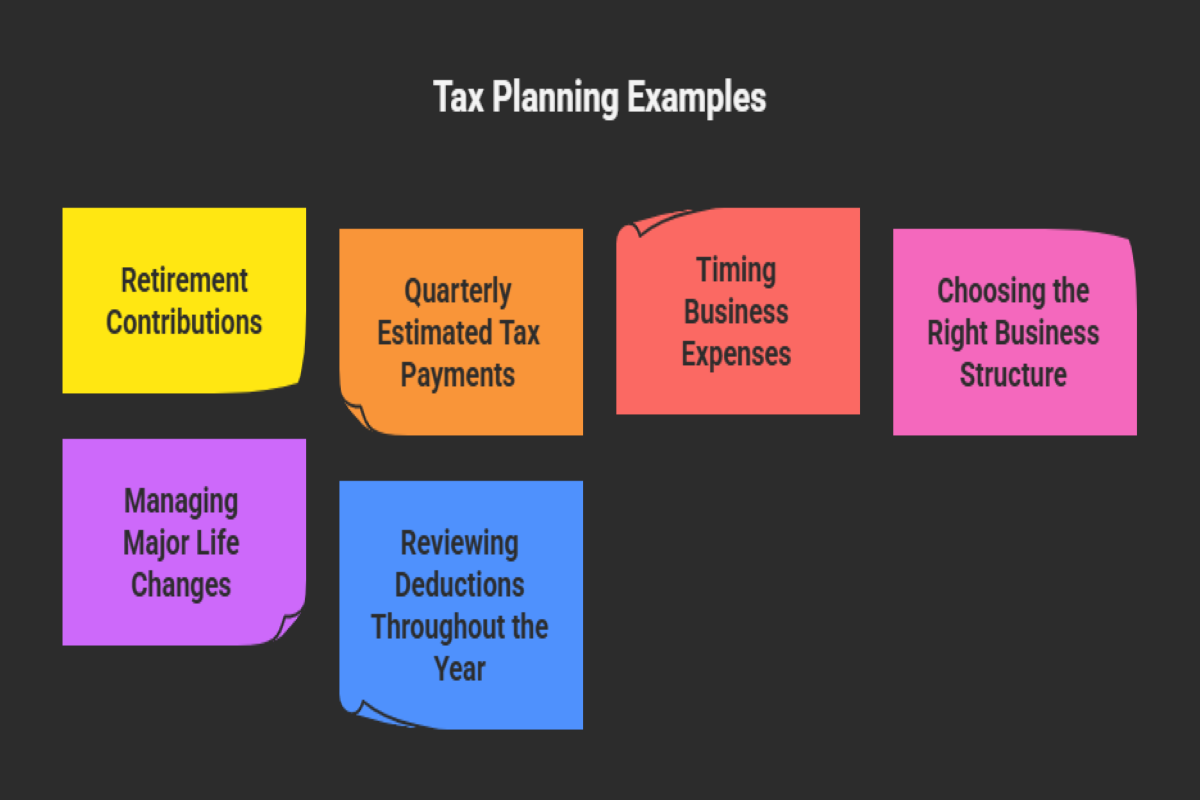
Retirement Contributions
Many taxpayers miss opportunities to lower taxable income simply because they wait too long to review retirement options.
For example:
Traditional IRA contributions
SEP IRA contributions
Solo 401(k) planning for self-employed individuals
Employer retirement plan adjustments
A person who reviews income early may decide to increase contributions strategically before deadlines arrive.
Someone who only looks at taxes during filing season may realize afterward they could have reduced taxable income significantly.
Quarterly Estimated Tax Payments
This is especially important for freelancers, contractors, small business owners, gig workers, and anyone without automatic withholding because income can fluctuate throughout the year, making it easier to fall behind on estimated tax payments and face unexpected tax bills, penalties, or cash flow issues.
Timing Business Expenses
Business owners often have flexibility around when certain expenses happen.
That timing can matter.
For example:
Equipment purchases
Software investments
Vehicle expenses
Professional services
Office upgrades
In some situations, accelerating or delaying purchases strategically may improve deductions for the current tax year.
The key is reviewing those decisions before year-end instead of after.
Choosing the Right Business Structure
Many growing businesses stay structured the same way for years simply because nobody revisits it.
But as revenue changes, the original setup may no longer be the most tax-efficient option.
Depending on the situation, planning discussions may include:
Sole proprietorships
LLC structures
S-Corp elections
Payroll strategy adjustments
This usually only matters once income reaches certain levels. But when it does apply, the financial impact can become meaningful.
Managing Major Life Changes
Taxes often change after major financial or personal events.
Examples include:
Marriage
Divorce
Having children
Buying or selling property
Starting a business
Receiving investment income
Changing jobs
Without planning, many people discover the tax impact only after filing returns.
A proactive review helps identify what may need adjustment before deadlines create problems.
Reviewing Deductions Throughout the Year
One of the biggest mistakes taxpayers make is trying to reconstruct deductions months later from memory, inbox searches, and incomplete records.
That usually leads to missed opportunities.
Ongoing tracking makes a major difference for:
Mileage
Home office expenses
Business meals
Charitable donations
Contractor expenses
Healthcare costs for self-employed individuals
This doesn’t require perfect bookkeeping overnight.
It simply works better when reviewed consistently instead of all at once under pressure.
The Common Thread Behind All Tax Planning
None of these examples rely on aggressive strategies or complicated loopholes.
Most are simply the result of reviewing finances early enough for decisions to still matter.
That’s the part many people miss. Tax filing reports the outcome. Tax planning helps shape it beforehand.
What Happens When You Only File Taxes
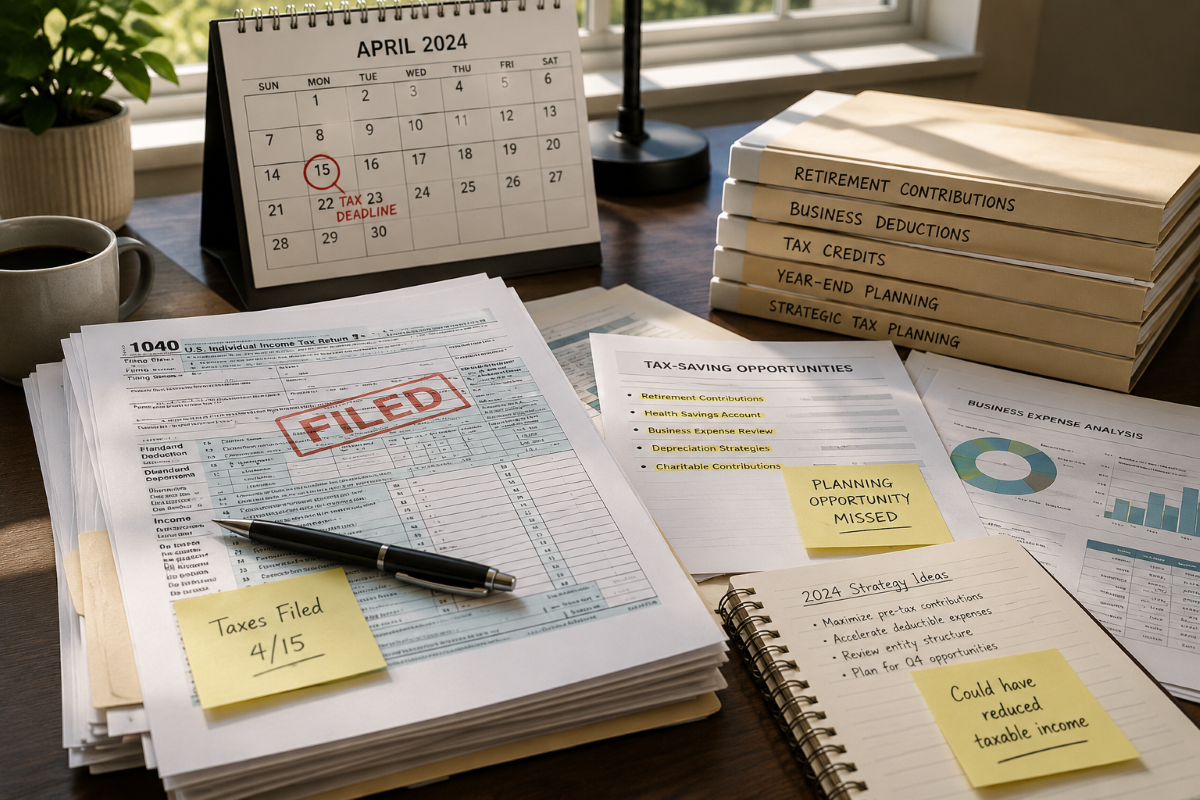
For many people, taxes become a once-a-year emergency.
Documents get collected at the last minute. Income gets reviewed under pressure. Questions that should have been addressed months earlier suddenly become urgent because filing deadlines are close.
That cycle is more common than people think.
And while filing taxes accurately is important, relying on filing alone often creates financial problems that could have been reduced with earlier planning.
Missed Deductions
One of the biggest issues is incomplete deduction tracking.
By tax season, people are often trying to remember:
Business expenses
Mileage
Charitable contributions
Equipment purchases
Home office costs
Contractor payments
Some records get lost. Others were never tracked properly to begin with.
In many cases, the deduction technically existed, but the documentation or planning around it didn’t.
That can directly increase taxable income.
Surprise Tax Bills
This happens frequently with:
Self-employed professionals
Freelancers
Side income earners
Growing businesses
Without ongoing planning, taxes are often underestimated during the year.
Then filing season arrives and the balance owed feels much larger than expected.
The issue usually isn’t that something unusual happened.
It’s that nobody adjusted for income changes early enough.
Quarterly reviews and estimated payment adjustments are designed to prevent this exact problem.
Cash Flow Pressure
Unexpected taxes create more than frustration.
They affect cash flow.
A business owner expecting to reinvest profits may suddenly need to redirect funds toward taxes. Individuals may end up using savings, delaying financial goals, or carrying balances they weren’t prepared for.
This is where reactive taxes start affecting larger financial decisions.
Planning helps reduce those surprises by creating visibility earlier in the year.
Last-Minute Financial Decisions
When taxes are only reviewed during filing season, decisions become rushed.
People start asking questions like:
“Is there anything I can still do?”
“Can this expense still count?”
“How do I reduce what I owe now?”
Sometimes there are still options available.
Often, the biggest opportunities have already passed.
That’s why proactive tax planning tends to feel less stressful overall. Decisions happen gradually instead of all at once under deadlines.
Reactive Instead of Strategic
Filing taxes without planning often keeps people stuck in reaction mode year after year.
They file.
They owe money.
They move on.
Then the same cycle repeats the next year.
No adjustments get made because the process only looks backward.
Tax planning changes the conversation.
Instead of asking:
“What happened?”
You start asking:
“What should we adjust before this becomes a bigger issue later?”
That shift creates better financial awareness, stronger organization, and fewer surprises over time.
Why This Matters More for Business Owners
For business owners, reactive taxes become even more expensive because decisions made throughout the year affect:
Payroll
Profitability
Deductions
Cash flow
Estimated taxes
Growth planning
Without regular review, small inefficiencies compound quietly in the background.
And many business owners don’t realize it until tax season exposes the problem all at once.
This is why tax planning is not just about reducing taxes.
It’s also about creating more predictable financial decisions throughout the year.
Why Small Business Owners Need Both
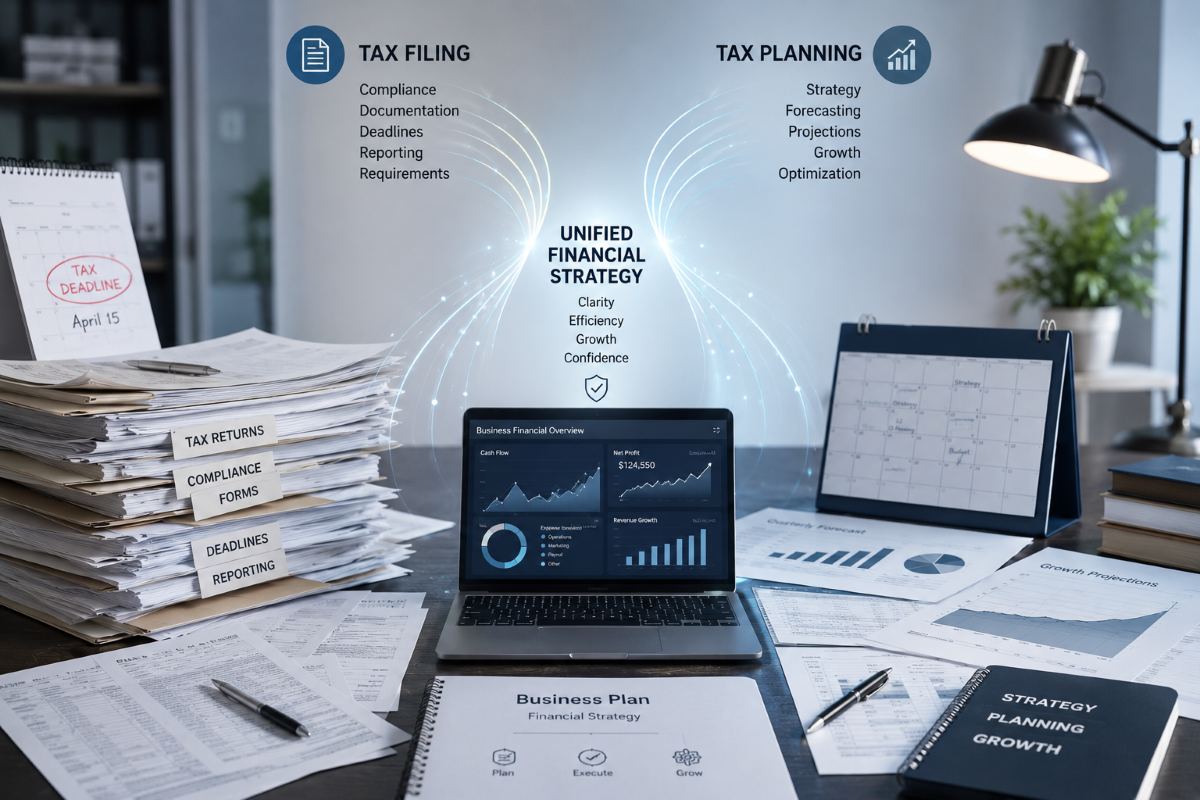
Small business taxes are rarely straightforward.
Even businesses with organized finances deal with moving parts that change throughout the year. Revenue shifts. Expenses increase. Payroll changes. New contractors get hired. Equipment gets purchased. Profitability changes faster than expected.
That’s why relying only on tax filing often creates problems over time.
Tax filing and tax planning serve two different purposes. Filing keeps the business compliant. Planning helps the business operate more efficiently financially.
Both matter.
One profitable quarter alone can completely change a company’s tax situation. This happens constantly with service businesses, agencies, consultants, contractors, and growing companies. A business may start the year modestly and end far more profitable than expected.
Without proactive planning, taxes usually lag behind that growth until filing season arrives.
That’s when business owners suddenly realize:
Estimated payments were too low
Cash reserves were not prepared
Profit margins increased tax exposure
Payroll structure may no longer make sense
Nothing here is unusual. In many cases, the business simply outgrew the tax strategy being used.
Business owners also have more deduction opportunities than traditional employees. Depending on the situation, there may be opportunities related to equipment, software, vehicle expenses, retirement contributions, healthcare costs, payroll structure, or home office usage.
But those deductions usually require organization throughout the year.
Trying to rebuild expenses from old receipts, bank statements, and email searches during tax season often leads to incomplete records and missed opportunities.
As businesses grow, tax structure starts mattering more too.
Some businesses remain fine as sole proprietorships for years. Others eventually benefit from reviewing entity structure, payroll setup, or S-Corp elections. These decisions are rarely effective when rushed at the last minute during filing season. They usually need review earlier while adjustments can still be made strategically.
This is also why many business owners feel frustrated with taxes in general.
The process feels reactive.
One year taxes feel manageable. The next year the balance owed jumps unexpectedly. That unpredictability affects budgeting, hiring decisions, reinvestment plans, and overall cash flow confidence.
Ongoing tax planning helps reduce those surprises.
Instead of waiting until filing season to understand the financial picture, business owners gain visibility throughout the year. They can adjust estimated payments gradually, prepare for larger liabilities early, and make financial decisions with better information.
Tax filing is still essential. Businesses still need accurate returns, payroll filings, documentation, and compliance reporting completed correctly and on time.
But when tax filing is supported by proactive planning, the process becomes much more predictable.
The return stops feeling like a surprise and starts reflecting decisions that were already reviewed throughout the year.
When Should You Start Tax Planning?
Most people start thinking about taxes sometime between January and April.
That’s usually too late for meaningful planning.
At that point, the focus becomes filing accurately with the decisions that already happened during the previous year. In many situations, the biggest opportunities to reduce taxes legally depended on actions that needed to happen months earlier.
That’s why tax planning works best before tax season arrives.
For individuals, this may simply mean reviewing finances before year-end instead of waiting until filing deadlines are close.
For business owners, it often means checking in quarterly.
Income changes quickly in business. Expenses fluctuate. Profitability shifts. A strategy that worked six months ago may no longer fit the current financial picture.
Quarterly reviews help catch issues while there is still time to adjust them.
For example, proactive reviews may reveal:
Estimated taxes need adjustment
Revenue is increasing faster than expected
Retirement contributions should change
Business purchases may need better timing
Payroll structure may no longer be efficient
Catching those issues in October creates options.
Catching them during filing season usually creates limitations.
This is especially important after major financial changes.
Tax planning becomes more valuable when someone:
Starts a business
Becomes self-employed
Experiences a significant income increase
Adds investment income
Gets married or divorced
Purchases property
Hires employees
Expands operations
These events often affect taxes long before people realize the impact.
And in many cases, the financial consequences become visible only after the return is prepared.
That’s why proactive planning matters.
It shifts taxes from a once-a-year reaction into an ongoing financial review process.
Nothing here requires constant meetings or overly complicated strategies. In many situations, small periodic reviews are enough to identify issues before they become expensive or stressful later.
The earlier planning starts, the more flexibility usually exists.
And for many taxpayers, that flexibility is what creates better outcomes by the time filing season finally arrives.
Signs You May Need Tax Planning
Many people assume tax planning is only necessary for high-income earners or large companies. In reality, the need for proactive planning usually begins when finances become more complex than a standard paycheck and annual tax return.
The problem is that most taxpayers do not notice the shift immediately. They continue handling taxes the same way they always have until certain patterns start appearing during filing season.
One common sign is owing more taxes each year than expected. That does not automatically mean anything was filed incorrectly. In many cases, income increased, withholding no longer matches current earnings, or estimated payments were never adjusted as financial circumstances changed. Without planning, those same issues tend to repeat every year.
Self-employment and side income are another major trigger for tax planning. Once income starts coming from freelance work, consulting, contracting, online sales, or investments, taxes become less predictable. Instead of taxes being automatically withheld through an employer, the responsibility shifts to the taxpayer to track income, manage deductions, and prepare for quarterly payments properly.
Major income changes also create situations where planning becomes more important. A promotion, profitable business year, investment gain, or new revenue stream can significantly change tax exposure. Many people only discover the impact after their return is prepared, when the best opportunities to adjust have already passed.
Life changes often create similar issues. Marriage, divorce, buying a home, having children, changing jobs, or relocating can all affect filing strategy, deductions, credits, and withholding needs. Most taxpayers are not expected to understand every tax implication immediately. What matters is reviewing those changes early enough to avoid preventable surprises later.
Another sign is constantly feeling uncertain about how much money should be set aside for taxes. This happens frequently with freelancers and business owners whose income fluctuates throughout the year. Without proactive planning, taxes can feel inconsistent and difficult to predict, which affects budgeting, cash flow, and financial confidence overall.
For many people, the clearest indicator is simply waiting until tax season to look at finances at all.
That approach may work when finances are straightforward. But once income sources, deductions, or business activity become more dynamic, waiting until filing season usually limits available options significantly.
Tax planning works best while decisions can still be adjusted.
That’s the real advantage.
What Better Tax Planning Actually Looks Like

Tax filing and tax planning are closely connected, but they solve different problems.
Filing taxes keeps you compliant. It reports income, deductions, and financial activity correctly after the year has already happened. Tax planning works earlier. It helps shape financial decisions before deadlines close off opportunities to reduce taxes legally.
That distinction is where many taxpayers start seeing better outcomes.
People often assume higher tax bills mean they did something wrong. In reality, many costly tax situations happen simply because important decisions were never reviewed early enough. Income changes, business growth, retirement contributions, estimated payments, and deduction tracking all have a larger impact when addressed proactively instead of reactively.
This is especially true for business owners, self-employed professionals, and households with multiple income sources. The more financial movement happening throughout the year, the more valuable planning becomes.
None of this requires overly aggressive strategies or complicated loopholes. In many cases, effective tax planning comes down to reviewing finances consistently and making adjustments before problems become expensive.
That’s the real goal.
Not turning taxes into something complicated. Making them more predictable.
If you’ve only focused on filing taxes in the past, that’s more common than people think. But if tax season keeps bringing surprises, larger balances owed, or uncertainty around what could have been done differently, it may be time to look at taxes earlier in the year instead of only during filing season.
If your finances have become harder to predict, a proactive tax planning review can help you create clearer visibility, uncover missed opportunities, and make more confident financial decisions throughout the year.