

What to Do If You Made a Mistake on a Past Tax Return
You filed your return and moved on, expecting it to be done. Then something starts to feel off. A number doesn’t look right, or you remember a form you may have missed. That small doubt turns into a bigger question: “Did I file this correctly?”
This is where most people get stuck. Not because the mistake is serious, but because they’re unsure what it leads to.
Here’s what actually matters. Most tax mistakes are fixable. The IRS expects that returns won’t always be perfect, and there’s a process in place to correct them. If you discover an error after filing, you can usually amend the return and adjust it properly.
The mistake itself is rarely the real problem. Delay is.
Fixing it early keeps the situation contained and straightforward. Waiting is what allows penalties, interest, and complications to build over time.
If part of your concern is what happens next, especially whether the IRS might contact you, read this guide: Should I Be Worried If I Get a Letter from the IRS?
What Counts as a Tax Return Mistake?
Not every change requires an amendment, but some errors are worth a closer look. Common mistakes include leaving off income, such as a 1099 or W-2, entering incorrect totals, or selecting the wrong filing status. Others come from missed deductions or credits, misreported business expenses, or even simple details like using the wrong Social Security number. In some cases, the issue is a basic miscalculation of the tax owed.
Some of these mistakes increase what you owe. Others may mean you overpaid. Either way, both can be corrected once you identify them.
How Do You Fix a Mistake?
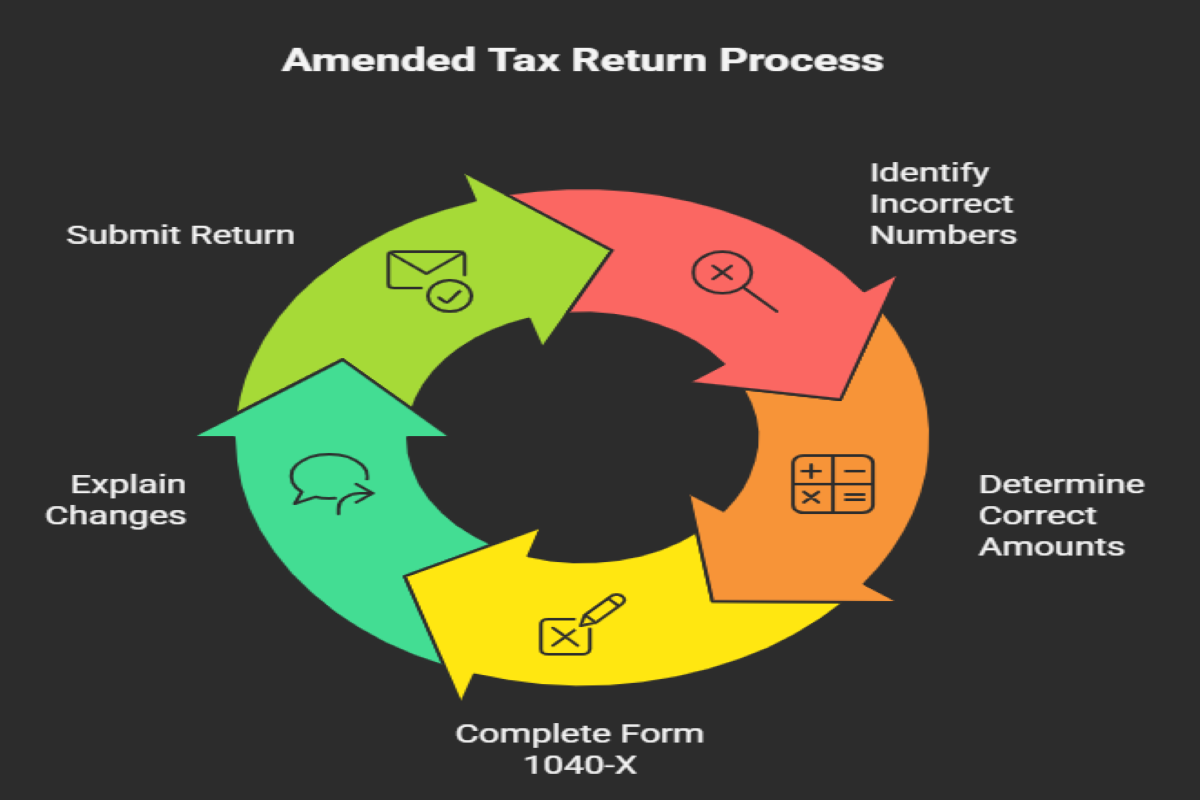
You file an amended return using Form 1040-X.
The process typically involves:
Identifying the incorrect numbers
Determining the correct amounts
Completing Form 1040-X
Explaining what changed
Submitting electronically (if eligible) or by mail
The amended return adjusts your original filing rather than replacing it entirely.
It creates a formal correction record.
Is There a Time Limit to Amend a Return?
Yes, there is a time limit, and it matters more than most people expect.
In most cases, you have up to three years from the original filing date to claim a refund. After that window closes, any refund you were entitled to may no longer be available.
If the correction means you owe additional tax, timing becomes even more important. Amending sooner helps limit penalties and interest, which continue to build from the original due date.
Waiting doesn’t reduce the problem. It usually makes it more expensive.
Will Amending a Return Trigger an Audit?
This is one of the most common concerns people have.
Filing an amended return does not automatically trigger an audit. Amended returns are a normal part of the system, and the IRS processes them regularly. While they are reviewed, that review is not the same as a formal examination.
In many cases, correcting an error on your own can actually reduce risk. Addressing the issue early is generally viewed more favorably than leaving a discrepancy for the IRS to discover later.
What If the IRS Already Sent You a Notice?
If you receive a notice about the same issue:
Follow the instructions in the notice
Do not file a second return unless directed
Respond with documentation or explanation
Sometimes responding directly to the notice is more appropriate than filing an amendment.
The key is not duplicating actions.
What If the Mistake Involves a Business Return?
Business return corrections tend to be more technical because one change rarely stays isolated. A single mistake can flow through multiple forms and affect more than you expect.
Some of the most common issues include:
Underreported Schedule C income
Misclassified expenses
Payroll tax miscalculations
Incorrect estimated tax payments
S-Corp or partnership allocation errors
Here’s where it gets more complex. Adjusting one number can trigger changes across several areas, including:
Self-employment tax
Estimated payments
Deductions
Even future filings
That’s why business amendments shouldn’t be rushed. Reviewing the full impact before submitting anything helps prevent creating a second problem while fixing the first.
What If the Mistake Means You Owe More?
If correcting your return increases what you owe, the timing becomes important.
Interest starts from the original due date, not the date you fix it, and penalties may apply depending on the situation. That’s why addressing it early makes a difference. It limits how much those extra costs can grow.
The IRS does offer ways to manage the balance if needed. Depending on your situation, this can include:
Payment plans
Installment agreements
Penalty relief options in certain cases
The longer the issue sits uncorrected, the fewer of these options stay simple and manageable.
What If the Mistake Means You’re Owed a Refund?
If correcting your return lowers your tax liability, you may be entitled to a refund. In that case, timing works in your favor, but only if you stay within the allowed window.
Most taxpayers have up to three years from the original filing date to claim that refund. After that, the opportunity can expire, even if the overpayment is clear.
Many people assume they can go back and fix overpayments at any time. In reality, there’s a limit, and once it passes, the refund is no longer available.
Why People Avoid Fixing Mistakes?

It’s rarely about the paperwork. Most of the hesitation comes from somewhere else. You might worry about drawing attention, feel unsure how serious the issue really is, question whether it’s even worth correcting, or hope it won’t matter at all.
But uncertainty doesn’t resolve itself. Clear corrections do.
How to Decide Whether to Amend
The decision usually comes down to a few practical questions:
Does the amount actually matter?
Is it something the IRS would likely catch through their matching systems?
Does fixing it reduce your risk or affect more than one tax year?
If the answer to any of these is yes, it’s worth taking a closer look.
Some issues are minor and won’t change much. Others seem small but grow over time if left unaddressed. The key is knowing which situation you’re dealing with before deciding to leave it as is.
If You Found a Mistake and It’s Sitting in the Back of Your Mind
Most people don’t lose sleep over paperwork.
They lose sleep over questions like:
“Will the IRS catch this later?”
“Did I just create a bigger problem?”
“Should I fix it… or leave it alone?”
That uncertainty is heavier than the amendment itself.
And here’s the part most people don’t realize:
Small errors grow quietly.
Interest compounds.
Deadlines expire.
Refund windows close.
Doing nothing feels easier today.
It rarely feels easier a year from now.
If you discovered a mistake and you’re unsure whether to amend, let’s look at it together.
We’ll help you understand:
Whether the issue is minor or meaningful
Whether the IRS would likely detect it
What would correcting it actually change
And the cleanest way to fix it without creating new complications
If it’s small, you’ll know.
If it needs attention, you’ll have a clear plan.
Either way, you stop carrying it around in your head.
If this applies to you, schedule a return review, and we’ll take it from there.