

Received a Letter from the IRS? Here’s What It Usually Means
Did You Just Get a Letter from the IRS?
In most cases, it’s not as serious as it feels.
The IRS sends millions of letters every year. Many are routine notices. Some are simple corrections. A smaller number requires action. The important step is understanding what type of letter you received before assuming the worst.
Seeing “Internal Revenue Service” at the top of an envelope triggers a reaction. That’s normal. But most IRS letters are about alignment, not accusation.
Why Would the IRS Send Me a Letter?
The IRS usually sends a notice because something in their system doesn’t match the information on your tax return. In most cases, the issue falls into one of five categories:
Income reported by an employer or client doesn’t match your return
A payment was applied incorrectly or not recorded
A balance is due
Additional documentation is required
The IRS needs to verify your identity
Most of these notices are generated automatically. The IRS receives copies of tax forms from employers, banks, and payment platforms. These include W-2s, 1099s, brokerage reports, and other financial documents. Their systems compare those records with your return.
If something doesn’t align, the system generates a notice.
That doesn’t mean you did anything reckless. It usually means something didn’t line up and the IRS wants clarification.,
Does Getting a Letter Mean I’m Being Audited?
Usually, no.
Most IRS letters are routine notices generated by automated systems. An audit is a different process. When the IRS audits a return, the letter will typically use the word “examination” and request documentation for review.
Routine notices usually look different. They may propose a correction, show recalculated tax, or list a balance due with interest added. These letters are generated when the IRS system detects a mismatch or needs clarification about something reported on your return.
If your letter proposes a change, lists recalculated tax, or shows additional interest, it is likely a notice rather than an audit. If you’re unsure which type of letter you received, our full guide on IRS letters and audits explains the difference and what each one means.
What Are the Most Common IRS Letters?
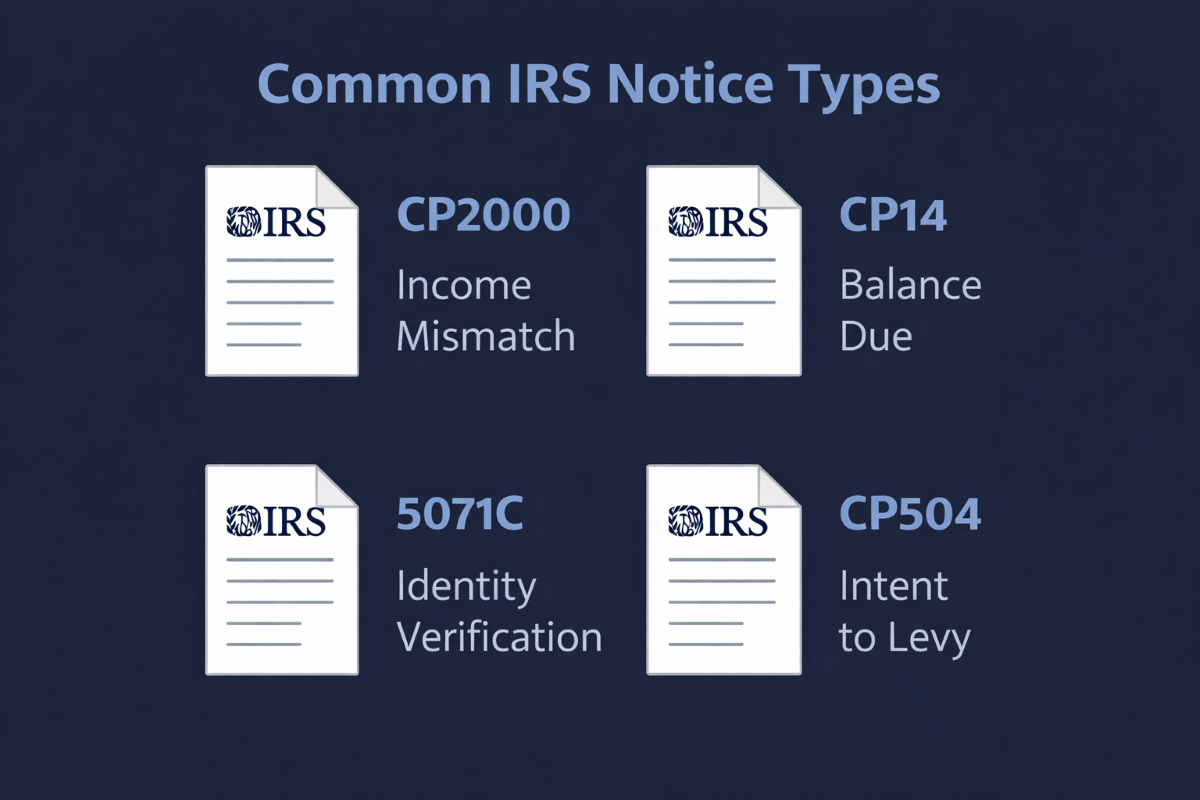
Here are the ones people see most often:
CP2000 – Income Mismatch
A CP2000 notice means the IRS believes the income on your tax return does not match information reported by third parties such as employers, clients, or financial institutions. The IRS compares your return with forms like W-2s and 1099s, and if something appears missing or different, the system generates this notice.
It’s important to understand that a CP2000 is not a final decision. The IRS is proposing a correction based on the information it has. You have the option to agree with the change or respond with documentation if the income was already reported correctly or belongs somewhere else on the return.
CP14 – Balance Due
A CP14 notice simply means the IRS believes you owe money based on the tax return that was filed. In many cases, the balance was already listed on the return but has not been paid yet. Other times, the IRS may have adjusted a credit, or a payment may not have been applied to the account properly.
At this stage, the notice is informational. It shows the amount owed, the payment deadline, and the interest that may apply if the balance remains unpaid. No collection action has started yet.
5071C – Identity Verification
A 5071C letter asks you to confirm your identity before the IRS processes your tax return. The IRS sends this notice when something in the filing triggers a fraud-prevention check.
Receiving this letter does not mean fraud occurred. It means the IRS wants to confirm that the return actually came from you. After the identity verification step is completed, the return typically continues through normal processing.
CP504 – Intent to Levy
A CP504 notice is more serious than the earlier letters. It usually appears after the IRS has already sent previous notices about a balance due and has not received a response.
The letter warns that the IRS may begin collection action if the balance is not addressed. Even at this stage, however, you still have options. Paying the balance, setting up a payment plan, or contacting the IRS to discuss the situation can usually stop the issue from moving further into the collection process.
What Should I Do First?

If you received a letter:
Open it immediately
Identify the notice number (top right corner)
Check the tax year referenced
Compare it to your filed return
Respond before the deadline
Silence is treated as agreement.
Responding preserves your rights.
Most situations stay manageable when addressed early.
What If I Disagree with the Notice?
You are allowed to disagree.
If you believe the IRS made an error:
Gather documentation
Submit a written response
Follow the instructions on the notice
Do not file a second return unless directed.
Many discrepancies are resolved through clarification.
Is This Common During Tax Season?
Yes.
Tax season increases:
Income matching activity
Identity verification letters
Payment discrepancy notices
Estimated tax corrections
It doesn’t mean audit rates spike dramatically.
It means volume increases.
More filings → more automated matching → more letters.
That’s procedural, not personal.
When Should I Be More Concerned?
Most IRS letters are routine. Some require closer attention.
You should slow down and review more carefully if:
The amount owed is significant
The letter references a levy or lien
Multiple tax years are involved
The notice uses the word “examination.”
You’ve ignored earlier letters
That doesn’t mean panic.
It means being deliberate.
There’s a difference.
When the stakes increase, clarity matters more.
Why These Letters Feel Bigger Than They Are
An IRS envelope carries weight. Many people see the return address and immediately assume something serious happened.
The first thought is often: “I must have done something wrong.”
In reality, that’s rarely how these situations begin. Most IRS notices start with small issues that appear when the IRS system compares your return with other records.
Common triggers include:
A mismatch between reported income and forms like a W-2 or 1099
A math correction on the return
A missing form or incomplete information
A payment timing issue where a payment wasn’t matched to the return yet
These situations usually come from system checks rather than accusations. The IRS receives copies of tax documents from employers, banks, and payment platforms, and their systems compare those records with what was reported on your return.
When something doesn’t align, the system generates a notice asking for clarification.
The process itself is structured. The IRS sends a letter explaining the issue, you review the notice and respond if necessary, and the IRS updates the account once the information is clarified.
That’s the normal pattern. It’s procedural, not chaotic.
If You’re Not Sure What You’re Looking At
Often, the hardest part isn’t the number listed in the notice. It’s the uncertainty around what the letter actually means.
Most people start asking the same questions:
Is this routine or something more serious?
Is the number the IRS listed actually correct?
Does the deadline require action right now?
Could this escalate if I ignore it?
Those questions tend to grow the longer the envelope sits on the counter.
In reality, most people don’t struggle with the letter itself. They struggle with not knowing how to interpret it. Once the notice is understood and the next step is clear, the situation usually becomes much easier to handle.
Let’s Get This Off Your Shoulders
If you’re still wondering whether the letter is routine or something that needs attention, that’s usually the point where a second set of eyes helps most.
Most people don’t struggle with the notice itself.
They struggle with the questions that come with it:
Is this just a routine system notice?
Is the amount actually correct?
Do I need to respond, or can I leave it alone?
Will this turn into something bigger if I wait?
And the longer those questions sit unanswered, the heavier the envelope starts to feel.
If you received a letter and want to know exactly what you’re dealing with, schedule a notice review with our team.
We’ll go through the notice together and look at the parts that actually matter:
What type of notice this is and why it was sent
Whether the amount or adjustment makes sense
Whether the deadline requires action
What is the cleanest next step should be
Sometimes the letter turns out to be routine.
Sometimes it needs a response.
Either way, you leave knowing what the notice actually means and what happens next.
Stop Letting the Letter Sit There
An IRS envelope tends to sit on the counter while the questions grow.
You don’t have to keep guessing.
Bring the notice to us. We’ll review it with you, explain what it means, and help you handle the next step so the issue doesn’t turn into something bigger.
Schedule your notice review, and let’s deal with the letter so you can move past it.