
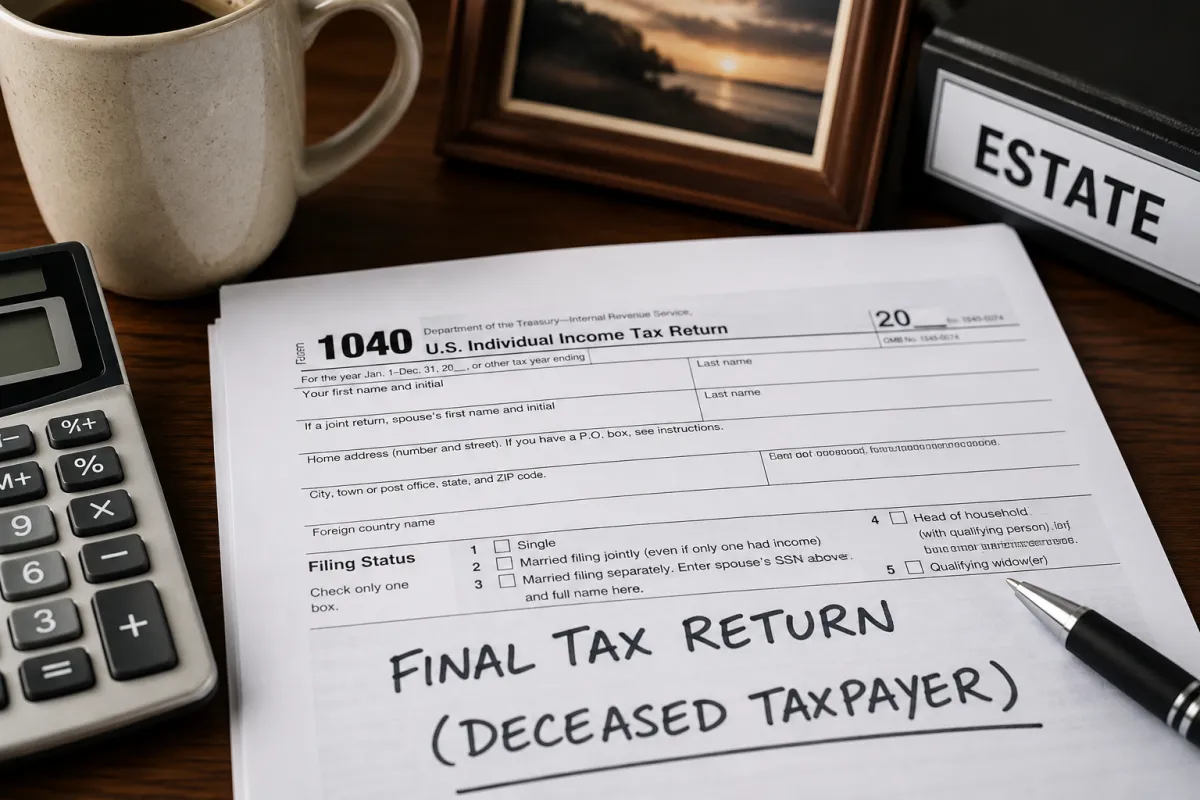
Tax Returns for the Deceased: How to File a Final Tax Return for Someone Who Died
Handling taxes after someone dies can feel confusing, especially when you are already dealing with legal paperwork, financial accounts, and family responsibilities. The good news is that you usually do not need to understand every estate or tax rule at once. The first step is simply figuring out which tax returns may be required, who is responsible for filing them, and what income belongs on each return.
In many cases, the deceased person's final individual income tax return is only one part of the process. You may also need to address unfiled prior-year returns or a separate estate income tax return if the estate continues earning income after the date of death. This guide explains the main filing responsibilities, forms, deadlines, and common situations you may encounter so you can understand what applies and what to do next.

What Tax Returns May Need to Be Filed After Someone Dies?
When someone dies, there may be more than one tax return to consider. The exact filing requirements depend on the person’s income before death, whether earlier returns are outstanding, and whether their estate earns income after death. Separating these obligations can make the process much easier to understand.
The main returns that may need attention include:
Final individual income tax return. The deceased person may need a final Form 1040 or 1040-SR covering income received from January 1 through the date of death. The usual individual filing requirements generally still apply when determining whether a return is required.
Prior-year individual returns. If the person was required to file returns for earlier years but did not do so before death, the personal representative may need to address those outstanding returns.
Estate income tax return. Income generated by estate assets after the date of death is generally treated separately from the deceased person’s final individual return. Depending on the estate’s circumstances and income, the estate may need to file Form 1041, U.S. Income Tax Return for Estates and Trusts.
Estate tax return. Form 706 is different from an estate income tax return. It generally applies only in certain estates based on federal estate and gift tax rules, so many families will never need to file it.
The important distinction is that the deceased person and the estate can become separate taxpayers for federal income tax purposes. Income received before death may belong on the final individual return, while income earned by estate assets afterward may belong to the estate. State filing requirements can also differ, so the returns required in a particular situation depend on the facts involved. Trustway’s approach is to explain tax issues in plain language and focus readers on what actually applies to their situation.
Who Is Responsible for Filing a Deceased Person's Tax Return?
The person responsible for filing depends on who is legally handling the deceased person's affairs. In most cases, that will be a surviving spouse, an executor named in the will, a court-appointed administrator, or another person responsible for the deceased person's property. The IRS generally refers to the person handling these duties as the personal representative.
Surviving Spouse
A surviving spouse may be responsible for filing the final tax return, especially when filing a joint return for the year of death. If no personal representative has been appointed, the surviving spouse can generally sign a joint return and indicate that they are filing as the surviving spouse. The IRS also generally treats the couple as married for the full year of death if the surviving spouse does not remarry during that year.
Executor or Court-Appointed Administrator
If an executor or administrator has been formally appointed, that person generally handles the deceased person's final return and any required prior-year returns. An appointed representative must sign the return, and if the return is filed jointly, the surviving spouse must sign it as well.
Personal Representative When No Executor Has Been Appointed
Sometimes there is no surviving spouse and no formally appointed executor or administrator. In that situation, the person who is actually responsible for the deceased person's property may need to file and sign the return as the personal representative.
The main point is to identify who has authority before preparing or signing anything. That becomes especially important when refunds, prior-year returns, estate assets, or separate estate tax filings are involved. Trustway's content framework emphasizes giving readers practical guidance that answers the immediate question without overwhelming them with unnecessary detail.
Is a Final Tax Return Always Required When Someone Dies?
No. A final federal income tax return is only required if the deceased person would normally have been required to file based on their income, age, filing status, and other tax circumstances for that year.
A final return may still need attention when:
The deceased person had enough income to meet the filing requirement.
Federal income tax was withheld and a refund may be due.
Estimated tax payments were made.
Prior-year tax returns were never filed.
The estate continued earning income after the person died.
The final Form 1040 or 1040-SR generally reports income received from January 1 through the date of death. Income earned by estate assets after that date may belong on a separate estate income tax return, such as Form 1041.
The key is to review the person’s full tax situation before deciding that no return is needed. A low income level does not always mean there is nothing to file, especially if refunds, prior returns, or estate income are involved.
What Income Goes on the Final Tax Return?
The final individual tax return generally includes income the deceased person received from January 1 through the date of death. In most cases, this is reported on Form 1040 or 1040-SR.
Common types of income may include:
Wages and salary
Self-employment income
Interest and dividends
Retirement income
Taxable Social Security benefits
Rental income
Investment income
The date of death is the key dividing line. Income received before death may belong on the final individual return, while income generated after death may belong to the estate or another recipient.
For example, if someone dies in July and their investment account continues earning interest afterward, some of that post-death income may need to be reported by the estate instead of on the deceased person’s final Form 1040. The exact treatment depends on the type of income and when it was received.
What Is the Difference Between Form 1040 and Form 1041 After a Death?
Form 1040 and Form 1041 serve different purposes after someone dies. The easiest way to understand the difference is to separate the deceased person from their estate.
Form 1040 or 1040-SR is the deceased person’s final individual income tax return. It generally reports income received from January 1 through the date of death.
Form 1041 is an income tax return for the estate. It may be required when the estate receives income after the person’s death, such as interest, dividends, or rental income.
For example, suppose someone dies in July and their savings account continues earning interest while the estate is being settled. Income attributable to the period before death may be reported on the final Form 1040, while income belonging to the estate after death may need to be reported on Form 1041.
The estate may also need its own Employer Identification Number (EIN) for tax purposes. This helps keep the estate’s tax activity separate from the deceased person’s individual tax affairs.
When Is the Final Tax Return Due?
The final tax return is generally due on the same date it would have been due if the person were still alive. For most calendar-year taxpayers, that means the regular April tax filing deadline following the year of death.
For example, if someone dies during 2026, their final 2026 Form 1040 or 1040-SR would generally be filed during the 2027 tax filing season.
A few timing issues may also need attention:
Any required prior-year returns that remain unfiled should be addressed separately.
An extension may be available if more time is needed to file the final return.
An extension to file generally does not extend the deadline for paying taxes owed.
The return usually does not need to be filed immediately after the person dies. This gives the surviving spouse or personal representative time to gather records and determine what filing obligations need to be handled.

How Do You File a Final Tax Return for a Deceased Person?
Filing a final tax return is similar to filing a regular individual return, but a few additional steps are required. Start by confirming who has authority to handle the deceased person’s tax matters.
1. Determine Who Is Responsible for Filing
Identify the appropriate person, such as a surviving spouse, executor, administrator, or other personal representative. This person will generally be responsible for preparing and signing the return.
2. Gather the Necessary Tax Records
Collect the documents needed to determine income, deductions, credits, and payments. These may include:
Prior-year tax returns
W-2s and 1099s
Retirement and Social Security statements
Investment records
Business or rental records
Estimated tax payment records
3. Check for Unfiled Prior-Year Returns
Before focusing only on the year of death, determine whether earlier required returns are still outstanding. Those returns may need to be prepared separately.
4. Prepare the Final Form 1040 or 1040-SR
Report the deceased person’s applicable income and deductions for the period from January 1 through the date of death. The return can generally be filed electronically or on paper.
5. Identify the Taxpayer as Deceased
When filing a paper return, include the word “DECEASED,” the person’s name, and the date of death across the top of the return. Electronic filing software generally provides instructions for identifying a deceased taxpayer.
6. Sign the Return Correctly
How the return is signed depends on who is filing it. A surviving spouse filing jointly, for example, follows different signature procedures than an executor or other personal representative.
7. Address Any Refund or Tax Due
Finally, determine whether the return results in a refund or balance due. Additional requirements may apply when claiming a refund on behalf of a deceased taxpayer, which we’ll cover later in this guide.
How Does a Surviving Spouse File a Joint Return?
A surviving spouse may generally file a joint tax return with the deceased spouse for the year of death if they otherwise qualify and have not remarried before the end of that year. This can allow the couple to use the married filing jointly status on the deceased spouse’s final return.
When filing jointly:
The return generally includes both spouses’ applicable income for the year.
The surviving spouse signs the return.
If no personal representative has been appointed, the surviving spouse generally signs for the deceased spouse and indicates they are filing as the surviving spouse.
If an executor or administrator has been appointed, that representative generally signs for the deceased spouse.
Filing jointly can affect tax rates, deductions, credits, and the final amount owed or refunded. For that reason, it can be useful to compare filing options before completing the final return.
A surviving spouse with a dependent child may also qualify for Qualifying Surviving Spouse filing status for up to two years after the year of death if IRS requirements are met. This is separate from filing the joint return for the year the spouse died.
How Do You Sign a Tax Return for Someone Who Has Died?
The correct signature depends on who is responsible for filing the deceased person’s return. The IRS has different procedures for surviving spouses and personal representatives.
Surviving spouse filing jointly: The surviving spouse signs the return and generally writes “filing as surviving spouse” in the deceased spouse’s signature area if no personal representative has been appointed.
Court-appointed executor or administrator: The appointed representative signs the return for the deceased person. On a joint return, the surviving spouse also signs.
Other personal representative: If there is no surviving spouse or court-appointed representative, the person responsible for the deceased person’s property may sign as the personal representative.
For electronically filed returns, the signature process may be handled through the tax preparation software. Follow the software’s instructions for identifying the deceased taxpayer and the person authorized to file.
What Happens If the Deceased Person Is Due a Tax Refund?
A tax refund does not disappear when someone dies. If the deceased person overpaid their taxes, the refund can generally still be claimed by the surviving spouse or the person legally responsible for the deceased person’s affairs.
In some situations, the person claiming the refund may need to file Form 1310, Statement of Person Claiming Refund Due a Deceased Taxpayer. This form tells the IRS who is requesting the refund and their authority to receive it.
Form 1310 is generally not required in certain situations, including when:
A surviving spouse files an original joint return with the deceased spouse.
A court-appointed personal representative files the return and provides the required documentation.
The requirements depend on who is claiming the refund and how the final return is filed. Before submitting Form 1310, check whether it is actually required for your situation.
What Happens If the Deceased Person Owes Taxes?
Death does not automatically eliminate taxes owed by the deceased person. If the final tax return shows a balance due, the personal representative generally handles the tax obligation as part of administering the deceased person’s affairs.
The amount owed may include:
Tax due on the final individual return
Unpaid taxes from prior years
Interest or penalties associated with outstanding tax obligations
Tax debts are generally addressed using available estate assets before the estate is fully distributed. Family members and beneficiaries should not assume they personally owe the deceased person’s tax debt simply because they are related to them. Individual responsibility can depend on the circumstances.
If the estate cannot pay the full amount immediately, the personal representative should review the available options with the IRS and, when necessary, seek professional tax or legal guidance before distributing remaining estate assets.
What If the Deceased Person Did Not File Taxes for Previous Years?
If the deceased person had required tax returns that were never filed, those obligations generally still need to be addressed. The personal representative should determine which years are missing before focusing only on the final tax return.
A practical process is to:
Review prior tax records to identify missing years.
Determine whether the deceased person was actually required to file for each year.
Gather available W-2s, 1099s, and other income records.
Request IRS transcripts when important records are missing.
Prepare and file any required outstanding returns.
Determine whether each return results in taxes owed or a refund.
Missing returns can make the process more complicated, especially when records are incomplete or several years are involved. Handling them systematically helps clarify the deceased person’s overall tax position before the estate is settled.
When Does an Estate Need to File Form 1041?
An estate may need its own income tax return because it becomes a separate taxpayer after someone dies. For a domestic estate, Form 1041 is generally required if the estate has $600 or more in gross income during the tax year. It may also be required when the estate has a beneficiary who is a nonresident alien.
Income-producing estate assets may include:
Savings accounts and CDs
Stocks, bonds, and mutual funds
Rental property
Other assets that continue generating income after death
Before filing Form 1041, the estate generally needs its own Employer Identification Number (EIN). If estate income is distributed to beneficiaries, Schedule K-1 may also be used to report each beneficiary’s share of applicable income.
The key distinction remains simple: the deceased person’s final Form 1040 reports applicable income through the date of death, while Form 1041 handles income belonging to the estate after death.

What Documents Should You Gather Before Filing?
Gathering the right records before preparing the final tax return can prevent delays and make it easier to separate the deceased person’s tax activity from the estate’s. The exact documents needed will depend on the person’s income, assets, and filing situation.
Common records to gather include:
Social Security number and date of death
Prior federal and state tax returns
W-2s, 1099s, and other income statements
Retirement and Social Security statements
Bank, brokerage, and investment records
Business or rental property records
Records of estimated tax payments
Documents supporting deductions and credits
Will or trust documents, when relevant
Letters of Testamentary or other documents showing authority to act
Death certificate for your records and situations where proof of death is required
The estate’s EIN if a separate Form 1041 is required
You may not need every document on this list. Start with the records that apply to the deceased person’s finances, then identify anything missing before preparing the return.
Common Mistakes When Filing Taxes for Someone Who Died
Tax filing after a death can involve several separate responsibilities. Knowing the common mistakes can help you avoid unnecessary delays and corrections.
Treating Form 1040 and Form 1041 as the same return. The final Form 1040 covers the deceased person’s individual taxes, while Form 1041 may be required for income earned by the estate.
Reporting income on the wrong return. The date of death helps determine whether income belongs on the deceased person’s final return or should be reported by the estate or another recipient.
Overlooking prior-year returns. If required returns were never filed before death, they may still need to be addressed.
Using the wrong person to sign the return. The signature requirements depend on whether the filer is a surviving spouse, executor, administrator, or other personal representative.
Assuming a death certificate must accompany the final return. A death certificate generally should not be attached to the final federal income tax return unless the IRS specifically requires proof of death for another purpose.
Distributing estate assets too soon. Before the estate is fully distributed, the personal representative should understand whether outstanding tax returns, balances, or other tax obligations still need to be handled.
The goal is to identify the deceased person’s and estate’s separate tax responsibilities before filing or distributing assets. When the situation involves multiple returns, missing records, or significant estate income, getting professional guidance can help prevent a small filing mistake from becoming a larger problem.
Federal and State Tax Rules Are Not Always the Same
Federal tax requirements are only one part of the filing process. State rules can differ, so completing the deceased person’s federal return does not necessarily mean every tax obligation has been handled.
Depending on the deceased person’s circumstances, you may also need to consider:
A final state income tax return
A state income tax return for the estate
State estate or inheritance taxes
Income or property connected to another state
Different state filing deadlines or requirements
The rules depend on where the deceased person lived, where they earned income, and where they owned property. Review the requirements for each applicable state rather than assuming the federal rules apply everywhere.
When Should You Get Professional Help With a Deceased Person's Tax Return?
Some final tax returns are relatively straightforward. Others become more complicated when multiple tax years, estate income, business interests, or beneficiary distributions are involved.
Professional tax guidance may be helpful when:
Several years of tax returns are missing.
The deceased person owned a business or rental property.
Significant investments or other income-producing assets are involved.
The estate may need to file Form 1041.
Income is being distributed to multiple beneficiaries.
The surviving spouse is unsure which filing status to use.
The estate has outstanding tax balances.
Important tax records are missing or incomplete.
Federal and state filing requirements overlap.
The key is identifying which tax obligations actually apply before filing returns or distributing estate assets. Getting help early can make it easier to separate the deceased person's final tax responsibilities from the estate's and reduce the risk of filing the wrong return or overlooking an obligation.
Frequently Asked Questions About Tax Returns for the Deceased
Tax responsibilities after someone dies can vary based on income, filing history, marital status, and the estate’s activity. These answers cover some of the most common questions families and personal representatives encounter.
Do You Have to File Taxes for Someone Who Died?
Not always. A final federal income tax return is generally required if the deceased person would have been required to file based on their income, age, filing status, and other applicable requirements.
What Is the Final Tax Return for a Deceased Person?
The final tax return is generally Form 1040 or 1040-SR covering the deceased person’s applicable income from January 1 through the date of death.
Who Files Taxes After Someone Dies?
The return may be filed by a surviving spouse, executor, court-appointed administrator, or another personal representative responsible for the deceased person’s affairs.
Does a Deceased Person Still Get a Standard Deduction?
Generally, yes. The standard deduction may still be available on the final individual return when the deceased taxpayer otherwise qualifies for it. The amount can depend on filing status and other circumstances.
Can You Electronically File a Deceased Person’s Tax Return?
Yes. A deceased person’s final individual income tax return can generally be filed electronically. Tax preparation software typically provides instructions for identifying the taxpayer as deceased.
Do You Attach a Death Certificate to the Tax Return?
Generally, no. A death certificate usually should not be attached to the final federal income tax return. However, proof of death may be required for certain other IRS requests.
What Happens to a Tax Refund When Someone Dies?
A refund can generally still be claimed. Depending on who files the return, Form 1310 may be required to claim a refund on behalf of the deceased taxpayer.
Does the Estate Need a Separate Tax Return?
Possibly. A domestic estate generally must file Form 1041 if it has $600 or more in gross income during the tax year or meets certain other filing requirements.
Can a Surviving Spouse File Jointly With a Deceased Spouse?
Generally, yes. A qualifying surviving spouse may file a joint return for the year of death if the applicable requirements are met and the surviving spouse has not remarried before the end of that year.
Are Taxes Due Immediately When Someone Dies?
No. The final individual income tax return generally follows the normal tax filing deadline rather than becoming due immediately after death.

What to Do Next
You do not need to solve every tax and estate question at once. Start by identifying who has authority to handle the deceased person’s tax matters, whether any prior-year returns are missing, and whether the estate continued earning income after the date of death.
Those answers can help determine whether you are dealing with one final individual tax return or additional filings, such as Form 1041. From there, gather the necessary records and address each filing requirement in the right order.
If you are handling a deceased family member’s taxes and are unsure which returns apply, Trustway Accounting can help you review the situation. We’ll help you understand what needs to be filed and what your next steps look like.
Not Sure Which Tax Filing Applies After a Death?
A final individual return, prior-year filings, and estate-related taxes can involve different requirements. You do not need to sort through every form on your own.
Trustway Accounting can help you review the situation, identify which tax filings may apply, and determine the appropriate next step.
Explore Tax Services & Schedule a Consultation