

Tax Mistakes to Avoid: Costly Filing Errors That Can Lead to Missed Deductions, Delays, and IRS Problems
Tax Mistakes That Cost You Thousands And How to Avoid Them
Tax mistakes are more common than you think. Most people do not make them because they are careless. They happen because tax rules are confusing, forms arrive at different times, and it is not always clear which details matter until something feels off.
That “something” may be a refund that is much smaller than expected. It may be a surprise balance due, a missing 1099, a deduction you forgot to claim, or an IRS notice that shows up months after you thought everything was finished. None of that automatically means you are in trouble. It does mean the return needs to be reviewed carefully, because small details can affect the final result.
The expensive mistakes are not always obvious. A typo may delay a refund, but a missed deduction can quietly cost you money year after year. Reporting freelance income incorrectly can create penalties. Choosing the wrong filing status can change your refund. Waiting until the last minute can cause you to rush through questions that deserved more attention.
This is where tax filing starts to feel heavier than it should. You are trying to make the right choices, but the software or forms may not explain what applies to your situation. You may answer every question as best you can and still wonder whether something was missed.
This guide walks through the tax mistakes to avoid, why they happen, how they can cost you money, and what to review before you file. The goal is not to make tax season feel more stressful. It is to show you what actually matters, so you can file with a clearer process and fewer surprises.
What Are the Most Common Tax Mistakes to Avoid?
Before getting into each mistake, it helps to know where most tax problems usually start.
Some mistakes are simple data-entry issues. Others happen because a taxpayer does not realize a life change, income source, or deduction changes how the return should be filed. The harder part is that not every mistake feels like a mistake while you are making it. Sometimes everything looks fine until the refund is delayed, the balance due feels wrong, or a notice arrives later.
The most common tax mistakes to avoid usually fall into a few areas.
Some happen because the return is filed with incomplete information. That might mean filing before all tax forms arrive, forgetting about a 1099, or entering income incorrectly. This is especially common when someone has multiple income sources, freelance work, gig income, investments, or a job change during the year.
Other mistakes happen because the return does not reflect the taxpayer’s actual situation. Filing status, dependents, education expenses, childcare costs, retirement contributions, and self-employment activity can all affect the final result. When those details are misunderstood or skipped, the return may be technically filled out, but not as accurate or complete as it should be.
Then there are mistakes that come from poor records. Receipts get lost. Mileage is not tracked. Business and personal expenses get mixed together. Charitable contributions are forgotten. By the time tax season arrives, the taxpayer is left trying to recreate the year from memory, which makes missed deductions much more likely.
Last, some mistakes happen because people assume the filing tool will catch everything. Tax software can be helpful, but it only works with the information entered. If the wrong answer is selected, a form is missing, or a deduction is never considered, the software may not know there is a problem.
Here’s the part that actually matters: most of these mistakes are preventable. You do not need to become a tax expert. You just need to know where errors usually happen, what documents matter, and when a situation deserves a closer look.
Mistake #1: Filing Before You Have All Your Tax Documents

Filing early can be a good thing. It gives you more time to handle questions, avoid deadline pressure, and know where you stand. But filing too early can create a different problem: you may submit a return before all the right information is in front of you.
This is more common than most people realize. Tax forms do not always arrive at the same time. You may receive a W-2 from an employer, then later receive a 1099 for freelance work, bank interest, investment income, unemployment income, retirement distributions, or payment app activity. If one of those forms is missed, the return may not match the records already sent to the IRS.
That does not mean you did something intentionally wrong. It usually means the return was filed before the full picture was available. The issue is that the IRS may still compare your return against forms submitted by employers, clients, banks, brokers, and other institutions.
When income is missing, a few things can happen. Your refund may be delayed. You may need to file an amended return. You may receive a notice asking about the mismatch. In some cases, the mistake can lead to additional tax, penalties, or interest if the missing income changes what you owed.
How to Avoid This Mistake
Before filing, make sure you have a complete tax document checklist for your situation. That may include W-2s, 1099s, mortgage interest statements, student loan interest forms, investment forms, charitable giving records, childcare statements, business income records, and prior-year tax documents.
Before you file, it helps to work from a clear checklist of the forms needed to file taxes so you can confirm your income documents, deduction records, and filing details are complete.
The goal is not to collect every document that exists. The goal is to collect the documents that apply to you. If you changed jobs, earned side income, sold investments, paid education expenses, bought a home, had a child, or started freelancing, your checklist may look different than it did last year.
A simple rule helps: if money came in, money went out for a deductible purpose, or a major life change happened, pause before filing and make sure the paperwork supports it. That extra review can prevent a rushed return from turning into a correction later.
Mistake #2: Reporting Income Incorrectly
Income reporting sounds simple until your income does not come from one place.
For a traditional employee with one W-2, the process may be fairly straightforward. But many taxpayers have more than one source of income now. You may have a full-time job and a side business. You may freelance, drive for a gig platform, sell products online, receive investment income, earn interest, or get paid through apps. Each of those income sources can affect your return.
This is where people usually get stuck. They may assume income only matters if they received a form for it. They may forget about a small freelance project from early in the year. They may not realize that a payment platform, brokerage, client, or employer may also report income to the IRS.
If your return does not match the income information the IRS receives, it can create a mismatch. That mismatch may lead to a notice, a delayed refund, or a recalculation of what you owe.
Why This Mistake Can Cost You
Incorrect income reporting can affect more than the income line on your return. It can change your taxable income, your deductions, your eligibility for certain credits, and the amount of tax due.
For example, a missing 1099 may increase your income enough to reduce a credit or create additional self-employment tax. Investment income may affect tax calculations differently than wages. A small side job may seem minor, but if no tax was withheld, it can still create a balance due.
This is fixable, but it is better to catch it before the return is filed. Correcting income later may mean filing an amended return, responding to a notice, or paying additional tax with interest.
How to Avoid This Mistake
Start by making a list of every place money came from during the year. Do not start with the forms. Start with the reality of what happened.
Think through:
Employers
Freelance clients
Investment accounts
Bank interest
Rental income
Unemployment income
Retirement distributions
Cash payments received
Gig platforms, Side jobs, or Payment apps
Then match that list against the forms and records you have. If something seems missing, pause before filing. You may need to download a form from an online portal, review bank deposits, or ask a payer whether a form was issued.
The main point is simple: income should be reviewed from more than one angle. Forms matter, but memory, bank records, client payments, and account portals can help fill in the gaps before they become problems.
Mistake #3: Choosing the Wrong Filing Status
Filing status is one of those tax details that looks simple on the surface. Single. Married filing jointly. Married filing separately. Head of household. Qualifying surviving spouse. It may feel like a basic personal information question.
But filing status can change a lot. It can affect your tax rate, standard deduction, credit eligibility, and refund amount. In some cases, choosing the wrong filing status can cause someone to miss benefits they qualified for or claim something that does not actually apply.
This usually becomes confusing when life changes. Marriage, divorce, separation, the death of a spouse, a new child, shared custody, or supporting a dependent can all change how the return should be filed. Even if your situation feels obvious, the tax rules may define it differently than everyday language does.
For example, someone may think they should file as single because they are not living with a spouse. Another person may support a child or relative but not realize they might qualify for a different filing status. These details matter because the IRS looks at the legal and financial facts of the year, not just what the situation feels like.
Why Filing Status Matters
Your filing status is not just a label. It helps determine how much income is taxed, which deductions may apply, and which credits may be available.
A wrong filing status can lead to a smaller refund, a higher balance due, or a return that needs to be corrected later. It can also affect credits tied to children, education, dependent care, or income level.
This is where people often need a second set of eyes. Not because they did anything wrong, but because the right answer may depend on details that are easy to overlook.
How to Avoid This Mistake
Before choosing a filing status, review what changed during the year. Did you get married or divorced? Were you legally separated? Did you support a child, parent, or other dependent? Did custody arrangements change? Did your spouse pass away? Did someone live with you for part of the year?
Those questions may feel personal, but they help determine how the return should be handled. If the answer is not clear, it is worth asking before filing instead of guessing.
The safest approach is to treat filing status as a decision, not a default setting. A few minutes of review can prevent a filing choice from costing you money or creating extra work later.
Mistake #4: Missing Tax Deductions You Were Allowed to Claim

Missed deductions can be one of the most expensive tax mistakes because they are easy to overlook and hard to notice after the fact. Nothing may look obviously wrong on the return. You may even receive a refund and assume everything was handled correctly.
But if you qualified for deductions that were never claimed, you may have paid more tax than you needed to pay.
This is especially common when people are busy, filing quickly, or using last year’s return as a rough template. Life changes, income changes, business expenses, medical costs, education payments, charitable giving, and home-related expenses can all affect what may apply.
Some deductions are familiar, like mortgage interest or charitable contributions. Others are easier to miss, such as educator expenses, student loan interest, certain medical expenses, retirement contributions, state and local taxes, or business expenses for freelancers and self-employed taxpayers.
The issue is not always that people forget the deduction exists. Sometimes they simply do not know whether they qualify. Other times, they know they spent the money but do not have the records to support it. That is when a deduction gets skipped, even if it may have been allowed.
Why Deductions Get Missed
Deductions usually get missed for one of three reasons.
First, the taxpayer does not know the expense might matter. This is common with smaller expenses that add up over the year, especially for self-employed people or gig workers.
Second, the taxpayer does not have clean records. If receipts are scattered, mileage is not tracked, or business expenses are mixed with personal purchases, it becomes harder to identify what should be reviewed.
Third, the taxpayer assumes the standard questions in tax software will catch everything. Software can only work with the information entered. If you skip a section because you are unsure, answer a question incorrectly, or do not recognize the tax meaning behind a normal life event, the deduction may never be considered.
How to Avoid Missing Deductions
Start by reviewing your year, not just your forms. Tax documents are important, but they do not always tell the full story.
Think through what changed. Did you buy a home? Pay student loan interest? Make charitable contributions? Have high medical expenses? Contribute to retirement? Work from home for a self-employed business? Drive for business purposes? Buy supplies, software, equipment, or tools for freelance work?
Those details can matter.
The next step is keeping records throughout the year, not trying to rebuild everything in April. A folder for receipts, a mileage log, a separate business account, or a simple monthly review can make tax filing much easier.
This is also where a professional review can help. A second set of eyes may catch patterns, expenses, or missed opportunities that are easy to overlook when you are just trying to get the return finished. Trustway’s tax preparation and strategy services include reviewing deductions and credits that may apply, and its 2nd Opinion Tax Review is designed for people who want another look at a return they are unsure about.
Mistake #5: Overlooking Tax Credits
Tax credits are easy to confuse with deductions, but they do not work the same way.
A deduction reduces the amount of income that gets taxed. A credit reduces the tax bill itself. That difference matters because a credit can have a more direct effect on what you owe or what you receive back.
This is why overlooking credits can be costly. A taxpayer may carefully enter income, claim basic deductions, and still miss a credit tied to children, education, dependent care, retirement savings, home energy improvements, or income level.
The tricky part is that credits often depend on details that change from year to year. Your income may be different. A child may age into or out of a credit. You may start paying for school, childcare, or dependent care. You may become eligible for something this year that did not apply last year.
That is where people usually miss opportunities. They assume their tax return should look about the same as it did before, even though their life changed.
Why Credits Are Easy to Miss
Credits are easy to miss because they often come with specific rules. Some depend on income limits. Some depend on filing status. Some depend on whether a child or dependent qualifies. Others require certain forms, documentation, or expenses from the year.
For example, education credits may depend on qualified tuition and school forms. Child and dependent care credits may depend on care expenses and provider information. Retirement savings credits may depend on income, filing status, and eligible contributions.
None of this means you need to memorize every tax credit. That is not realistic for most people. What matters is knowing when a credit might be worth reviewing.
If you paid for childcare, supported dependents, went back to school, contributed to retirement, made certain home energy improvements, or had a major income change, it is worth slowing down before filing.
How to Avoid Missing Tax Credits
The best way to avoid missing credits is to review life changes before reviewing tax forms.
Ask what happened this year that was different from last year. Did your household change? Did your income change? Did you have education costs? Did you pay for childcare? Did you support someone financially? Did you make qualifying improvements to your home? Did you contribute to a retirement account?
Those answers help determine which credits deserve a closer look.
This is also why it helps to have someone explain what applies and what does not. Most people do not need every credit explained to them. They need to know which ones are relevant to their situation, which ones are not, and what records are needed to claim the right ones.
Mistake #6: Poor Recordkeeping Throughout the Year

Poor recordkeeping does not always feel like a tax mistake while it is happening. It usually feels like normal life.
A receipt gets thrown away. A mileage trip is not written down. A payment comes through a personal account. A charitable donation confirmation stays buried in an email inbox. None of those moments feel serious on their own, but they can make tax filing much harder later.
By the time tax season arrives, you may be trying to rebuild the year from memory. That is when deductions get missed, income gets harder to verify, and filing starts to feel heavier than it needs to be. This is one of the main reasons taxpayers procrastinate: they are not just filing a return; they are trying to organize an entire year at once.
Good records do not need to be complicated. They just need to be consistent enough that you can answer basic questions when it is time to file.
What Records Should You Keep?
The records you need depend on your situation, but most taxpayers should keep income documents, deduction records, prior-year tax returns, and any IRS or state tax notices. If you have dependents, education costs, medical expenses, charitable contributions, mortgage interest, or retirement contributions, those records may also matter.
If you are self-employed, freelance, or earn gig income, recordkeeping becomes even more important. You may need to track client payments, business expenses, mileage, software costs, supplies, home office details, estimated tax payments, and receipts connected to your work.
The goal is not to save every piece of paper forever. The goal is to keep clear support for the income, deductions, and credits claimed on your return.
How Better Records Reduce Tax Stress
Better records make tax filing easier because you are not relying on memory. You can see what came in, what went out, and what may need to be reviewed.
They also help prevent missed deductions. Many taxpayers lose money not because they did not qualify for a deduction, but because they could not find the documentation or forgot the expense happened.
A simple system can make a real difference. That might be a folder for tax documents, a monthly review of expenses, a separate account for business activity, or a digital place to save receipts as they come in. The best system is the one you will actually use.
This is more common than you think. Most people do not need a perfect filing system. They need a workable one that keeps tax season from turning into a search through old emails, bank statements, and shoeboxes.
Mistake #7: Self-Employed and Gig Workers Forgetting About Estimated Taxes
Self-employed and gig income can create a tax surprise because taxes usually are not withheld the way they are from a regular paycheck.
If you work as an employee, your employer typically withholds federal income tax, Social Security, and Medicare from each paycheck. When you freelance, contract, drive for a gig platform, sell services, or run a small side business, that withholding may not happen automatically. You may receive the full payment upfront, but the tax still has to be dealt with later.
That is where people get caught off guard. The money came in, the work was done, and everything felt normal during the year. Then tax season arrives, and the balance due is much higher than expected.
Nothing here is unusual. It is one of the most common issues for people with 1099 income, especially if it is their first year freelancing or if their side income grew more than expected.
Why Self-Employment Tax Surprises People
Self-employment tax is easy to miss because it is separate from regular income tax.
When you are self-employed, you may be responsible for Social Security and Medicare taxes that would normally be split between an employee and an employer. Since there is no employer withholding those amounts for you, the responsibility often shifts to you.
That does not mean every side job creates the same tax result. The amount depends on your income, expenses, filing situation, and whether estimated payments were made during the year. But if no money was set aside, the final number can feel bigger than expected.
This is where many freelancers and gig workers make the same mistake: they focus on what they earned, but not on what they may owe.
How to Avoid a Large Tax Bill
The best way to avoid a large surprise is to think about taxes throughout the year, not only when it is time to file.
That may mean setting aside a portion of each payment, tracking business expenses, reviewing income quarterly, and making estimated tax payments when needed. It also means keeping clean records so you are not guessing later.
If your income changes during the year, your tax plan may need to change with it. A few extra freelance projects, a new contract, or a stronger-than-expected gig income month can affect what should be set aside.
For self-employed taxpayers, the goal is not just to file correctly. It is to avoid finding out too late that no one was withholding taxes for you. A quarterly review can make that number much easier to manage.
Mistake #8: Mixing Personal and Business Expenses

Mixing personal and business expenses may not seem like a major issue at first. You buy something for work with your personal card. You use one bank account because it is easier. You cover a business cost quickly and tell yourself you will sort it out later.
Then tax season comes, and “later” becomes the problem.
When personal and business expenses are mixed together, it becomes harder to know what was actually business-related. That can lead to missed deductions, incorrect deductions, or long back-and-forth while trying to separate everything after the fact.
This matters most for freelancers, gig workers, sole proprietors, and small business owners. If you earn income outside a regular paycheck, your expenses may help reduce taxable income. But those expenses need to be clear, reasonable, and supported by records.
What This Looks Like in Real Life
This mistake usually does not happen all at once. It shows up in small ways throughout the year.
You might use the same credit card for groceries and business supplies. You might pay for software from your personal checking account. You might buy mileage-related fuel, office materials, tools, equipment, or client-related items without saving receipts. You might receive business payments through the same account you use for household expenses.
The issue is not that every mixed account creates a disaster. The issue is that it creates more work and more uncertainty. When everything is blended together, you have to spend time proving what belongs where.
That uncertainty can cause people to skip legitimate deductions because they are not sure they can support them. It can also lead to claiming expenses without enough documentation, which creates problems if the return is ever questioned.
How to Fix It Going Forward
The cleanest solution is to separate business and personal activity as early as possible. That may mean opening a separate bank account, using a dedicated credit card for business expenses, saving receipts digitally, and reviewing expenses every month instead of waiting until tax season.
You do not need a complicated system. You need a clear one.
For many self-employed taxpayers and small business owners, bookkeeping software can also help. Tools like QuickBooks can make it easier to categorize transactions, review income, track expenses, and see where money is going. Trustway provides QuickBooks implementation, cleanup, training, and optimization for clients who need better control over their financial records.
This is fixable. Even if your records are already mixed, the next best step is to start separating them now and clean up what you can. The sooner your business activity is easier to see, the easier your next return becomes.
Mistake #9: Waiting Until the Last Minute
Waiting until the last minute does not mean you are doing anything wrong. A lot of people put off taxes because the process feels unclear, time-consuming, or heavier than it should. When you are not sure what documents you need or which questions matter, it is easy to avoid the whole thing until the deadline gets close.
The problem is that rushing changes how people make decisions. You may skim through questions, forget to look for a missing form, skip a deduction because you do not have time to find the receipt, or file without asking about something that feels uncertain.
That is how small mistakes happen. Not because you were careless, but because there was no room left to slow down.
Last-minute filing can also make it harder to respond if something is missing. If a tax form has not arrived, a dependneedsent question is unclear, or freelance income needs to be reviewed, you have less time to sort it out before the deadline. The return may still get filed, but it may not get the review it needed.
An Extension Gives You More Time to File, Not More Time to Pay
This is one of the most common misunderstandings around tax deadlines.
A tax extension usually gives you more time to file the return. It does not automatically give you more time to pay any tax owed. If you expect to owe, payment may still be due by the original deadline, even if the completed return is filed later.
That detail matters. Some taxpayers file an extension thinking everything has been pushed back, then find out later that penalties or interest may apply because the payment was not handled on time.
An extension can still be useful. It can give you time to gather documents, review details, and avoid filing an incomplete return. But it should be used with a clear understanding of what it does and does not change.
How to Avoid This Mistake
Start earlier than you think you need to, even if you are not ready to file yet. The first step does not have to be complicated. Create one place for tax documents, make a list of income sources, and note anything that changed during the year.
If something is missing, you will know sooner. If a question needs attention, there is time to ask. If you may owe, there is time to estimate the payment instead of being surprised at the deadline.
You do not need to finish everything in one sitting. You just need to give yourself enough space to review the return carefully before it is submitted.
Mistake #10: Assuming Tax Software Catches Everything
Tax software can be useful. For many simple returns, it can help organize information, ask basic questions, and walk through the filing process step by step.
The issue is not that software is bad. The issue is that software only knows what you tell it.
If a form is missing, the software may not know. If a question is answered incorrectly, it may keep going. If you skip a section because you are unsure whether it applies, the software may not stop and ask follow-up questions the way a person would. That is where mistakes can slip through while everything still appears complete on the screen.
This becomes more important when your tax situation is not simple. Multiple income sources, freelance work, dependents, investment activity, education expenses, homeownership, divorce, marriage, or a new business can all add details that may need closer review.
Where Software Can Fall Short
Software is built to process information. It is not always built to understand the full story behind the information.
For example, it may ask whether you had business expenses, but it may not know that a purchase you made in March was actually for freelance work. It may ask about dependents, but it may not understand a shared custody situation unless the details are entered correctly. It may ask about income, but it may not know that a missing 1099 should still be reviewed.
This is where people can accidentally leave money on the table. They answer the questions they recognize and skip the ones they do not. The return gets filed, but certain deductions, credits, or planning opportunities may never be considered.
When a Professional Review Makes Sense
A professional review makes sense when your return feels different from last year, your refund is much lower than expected, you owe more than usual, or you are not sure whether something was entered correctly.
If your return feels off after filing, it may help to review the signs you might need a second look at your tax return before assuming everything was handled correctly.
It can also help if you have freelance income, gig work, a new dependent, a home purchase, education expenses, investment sales, retirement withdrawals, or a major life change. Those situations do not automatically mean your return is complicated. They just mean there are more places where details can matter.
A second set of eyes does not mean something is wrong. Sometimes it confirms the return looks accurate. Other times, it catches a missed form, deduction, or question before it turns into a bigger issue later.
How Tax Mistakes Can Cost You Money
A tax mistake does not always create a serious problem. Sometimes it is a small correction. Sometimes it is a delayed refund. Sometimes it simply means a number needs to be reviewed and adjusted.
But certain mistakes can cost you money, especially when they affect income, deductions, credits, payments, or filing deadlines. The cost may show up right away as a higher balance due, or it may show up later through a notice, penalty, or missed refund opportunity.
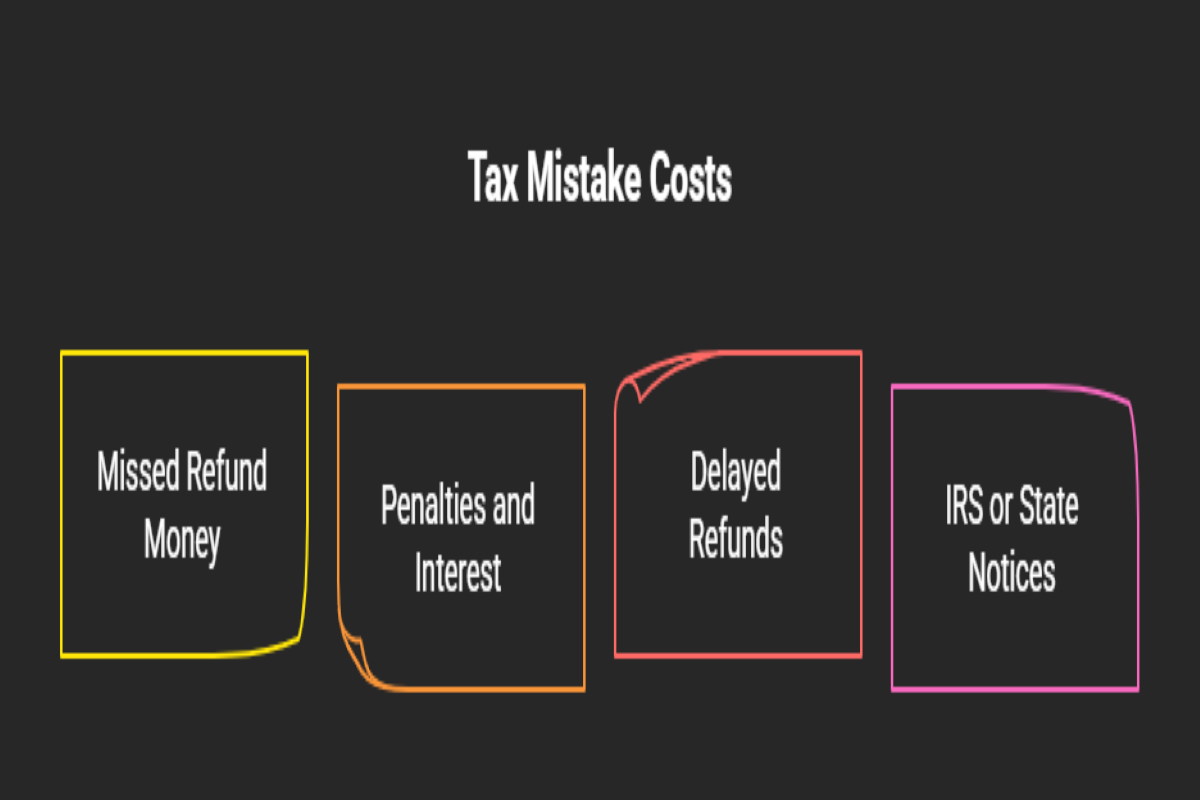
Here are the main ways tax mistakes can affect your money.
Missed Refund Money
This is one of the quietest costs.
If you miss deductions or credits you were allowed to claim, you may pay more tax than necessary. The return may still be accepted. Nothing may look obviously wrong. But the final result may not reflect every tax benefit available to you.
This can happen when someone forgets charitable contributions, education expenses, retirement contributions, business expenses, or dependent-related credits. It can also happen when a taxpayer assumes they do not qualify and never checks.
Penalties and Interest
Some mistakes can create extra costs if they lead to underpaid taxes or late payments.
This is common when income is missing, estimated taxes were not paid, or someone misunderstood what an extension does. The original tax amount may already be frustrating, but penalties and interest can make it worse.
The best way to reduce this risk is to catch issues early. If something looks off, it is usually better to review it before filing or to respond quickly if a notice arrives.
Delayed Refunds
Even simple errors can slow things down.
A wrong Social Security number, incorrect bank account, missing signature, incomplete income form, or mismatch with IRS records can delay processing. If you were counting on that refund for bills, savings, debt payments, or family needs, the delay can create real pressure.
This is why careful review matters. It may feel tedious in the moment, but catching small errors before filing can prevent weeks of waiting later.
IRS or State Notices
An IRS or state notice does not always mean something terrible happened. Sometimes it means there is a mismatch, a missing form, a corrected calculation, or a request for more information.
Still, notices should not be ignored. A small issue can become more expensive if deadlines are missed or the response is incomplete.
If you receive a notice, the next step is to slow down and review what the agency is asking for. Many notices are fixable. What matters is understanding the issue, checking it against your records, and responding the right way.
How to Avoid Tax Mistakes Before You File
The best time to catch a tax mistake is before the return is submitted. Once the return is filed, many issues can still be corrected, but it usually takes more time, more paperwork, and more back-and-forth than catching the issue upfront.
You do not need a complicated system to reduce mistakes. You need a clear review process that helps you slow down around the details that matter most.
Start by gathering every income document before filing. That includes W-2s, 1099s, interest statements, investment forms, unemployment records, retirement distribution forms, and any other income records that apply to your year. If you earned money from a source but do not see a form, pause and check before assuming it does not matter.
Next, review what changed in your life during the year. Marriage, divorce, dependents, job changes, side income, home purchases, education costs, childcare expenses, retirement contributions, and self-employment activity can all affect the return. A tax return should reflect the year you actually had, not just repeat what happened last year.
Then look closely at deductions and credits. This is where people often leave money behind. Charitable giving, education expenses, dependent care, retirement savings, business expenses, and certain home-related costs may need a closer review, depending on your situation.
If you freelance, earn gig income, or run a small business, review your records before filing. Make sure business and personal expenses are separated as much as possible. Check that income was reported completely. Look for expenses that were ordinary and necessary for your work, and make sure you have support for what you plan to claim.
It also helps to compare your return to the prior year. The numbers do not need to match, but large changes should make sense. If your refund dropped, your balance due increased, your income changed significantly, or a credit disappeared, it is worth understanding why before filing.
Finally, ask questions before submitting the return. If something feels unclear, that is usually a sign to slow down. You do not have to know the answer already. You just need to know when a detail deserves another look.
A careful review may take extra time upfront, but it can prevent delayed refunds, missed deductions, amended returns, and unnecessary notices later.
How Trustway Accounting Helps You Avoid Costly Tax Mistakes
Avoiding tax mistakes is not just about filling in boxes correctly. It is about understanding the full picture before the return is filed.
That means looking at income, deductions, credits, life changes, prior-year patterns, business activity, and anything else that may affect the result. Most people do not need every tax rule explained to them. They need someone to help identify what applies, what does not, and what needs attention before a mistake becomes a problem.
Trustway Accounting’s approach is built around that kind of review. The goal is to help clients file accurately, stay compliant, and understand their next step without feeling buried in tax language. Trustway provides tax preparation and strategy for individuals and business owners, including guidance around deductions, credits, estimated payments, and filing situations that may need closer attention.
For taxpayers with freelance income, gig work, business expenses, or multiple income sources, that review can be especially helpful. These returns often include details that are easy to miss when someone is trying to file quickly or rely only on software prompts.
Trustway also offers a 2nd Opinion Tax Review for people who are unsure about a past return or feel like something may have been missed. That does not mean something is automatically wrong. Sometimes a review confirms everything was handled correctly. Other times, it uncovers a deduction, credit, income issue, or filing detail worth correcting.
The main difference is that you are not left guessing. You get a clearer explanation of what matters, what needs to be reviewed, and what can be handled next. That is often the missing piece during tax season: not more information, but the right information for your situation.
When Should You Get a Second Opinion on Your Tax Return?
A second opinion can help when something about your tax return does not feel clear.
That does not mean something is wrong. It may simply mean your situation changed, your refund looks different than expected, or you want to understand whether the return was prepared correctly. This is more common than you think.
A second opinion may be worth considering if your refund was much lower than expected, you owed more than usual, or you had income from freelance work, gig platforms, investments, or a side business. It can also help if you bought or sold property, started a business, had a major life change, claimed dependents, or filed quickly and now wonder whether something was missed.
It is also a smart step if you received an IRS or state notice. A notice does not automatically mean there is a major problem. It does mean the details need to be reviewed carefully so the response is accurate and complete.
A Second Opinion Does Not Mean Something Is Wrong
Many people avoid asking for a tax review because they think it means they made a mistake. That is not the case.
Sometimes a review confirms that the return was handled properly. Other times, it finds a missed deduction, an income reporting issue, a credit that should be reviewed, or a filing detail that may need correction.
The value is clarity. Instead of wondering whether something was missed, you know what applies, what does not, and what should happen next.
You Do Not Have to Figure This Out Alone

Tax mistakes are easier to make than most people realize. A missing form, skipped deduction, wrong filing status, or misunderstood self-employment rule can change the outcome of a return without looking obvious at first.
But this is fixable. Most tax mistakes can be prevented with the right review process, better records, and a clearer understanding of what applies to your situation.
The goal is not to make you become a tax expert. You do not need that. The goal is to know when something deserves a closer look before you file, respond to a notice, or assume last year’s return still fits this year’s life.
Start with the basics. Gather every income document. Review what changed during the year. Check deductions and credits before skipping them. Keep business and personal expenses separate when possible. Slow down if the refund, balance due, or tax software result does not look right.
If you want another set of eyes on your return, schedule a consultation with Trustway Accounting. We’ll walk through your situation, explain what matters, and help you understand the next step before you move forward.
Frequently Asked Questions About Tax Mistakes
What is the most common mistake people make on taxes?
Some of the most common tax mistakes involve missing or incorrect information. That may include entering the wrong Social Security number, leaving off income, choosing the wrong filing status, missing a tax form, or forgetting a deduction or credit.
The mistake itself may be small, but the effect can still matter. It can delay a refund, change the amount owed, or lead to a notice asking for clarification.
Can I fix a mistake after filing my taxes?
Yes, many tax mistakes can be corrected after filing. Depending on the issue, you may need to file an amended return or respond to an IRS or state notice.
The best next step is to understand what kind of mistake happened before trying to fix it. A typo, missing income form, overlooked deduction, or incorrect credit may each require a different response.
Will a mistake automatically trigger an audit?
No. A mistake does not automatically mean you will be audited.
Some errors lead to a simple correction. Others may create a notice asking for more information. What matters is that you do not ignore the issue. If a notice arrives, read it carefully, compare it with your records, and get help if you are not sure how to respond.
What happens if I forgot to report a 1099?
If you forgot to report a 1099, the IRS may still receive a copy from the company, platform, or payer that issued it. If your return does not match the income reported to the IRS, you may receive a notice or need to amend the return.
This is fixable, but it should be reviewed carefully. The missing income may affect your tax amount, deductions, credits, or self-employment tax.
Is it worth having a professional review my tax return?
It can be, especially if your return includes multiple income sources, self-employment income, gig work, dependents, investments, education costs, retirement withdrawals, or major life changes.
A professional review can help confirm whether the return looks accurate or whether something deserves a closer look. Sometimes the value is not finding a big mistake. Sometimes it is simply knowing that the return was reviewed properly before you move forward.